


Yarn Selection: Choosing the Right Yarn for Your Crochet Project
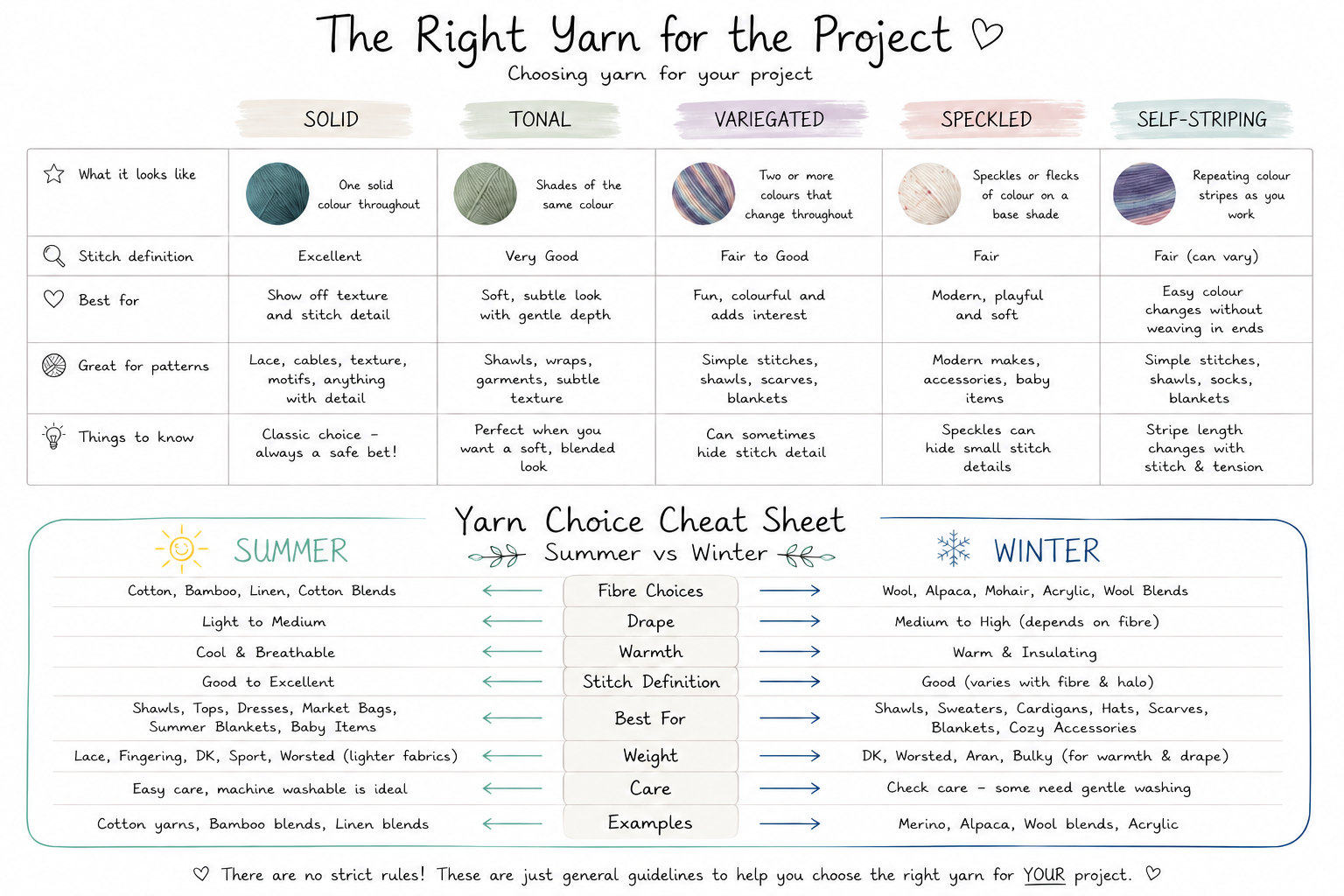
Note: The charts in this blog post are available to download for Members of the webpage. Membership is free. Sign up on the home page.
Let’s be honest… choosing yarn should be the fun part.
But sometimes it turns into one of those moments where you’ve got twelve tabs open, three skeins in your cart, and you’re still sitting there thinking “Is this going to crochet up beautifully… or am I about to make something that feels like a dishcloth?”
Because here’s the thing: not every yarn suits every project.
You can have the most stunning stitch pattern in the world, but if the yarn choice is off, the finished piece just won’t have the look or feel you were hoping for.
So if you’ve ever wondered why one shawl looks floaty and elegant, and another one (using the same pattern!) looks stiff and awkward… it’s almost always the yarn.
Let’s go through what actually matters when choosing yarn.
Start With the Finished Look (Not the Yarn Label)
Before you even think about fibre content or hook size, ask yourself:
What do I want this project to feel like when it’s finished?
Do you want it to drape and flow?
Do you want it warm and cosy?
Do you need it to hold its shape?
Is it going to be worn on the skin, or is it more decorative?
Once you know the goal, the yarn becomes much easier to choose.
Drape: The Secret Ingredient in Beautiful Shawls and Wearables
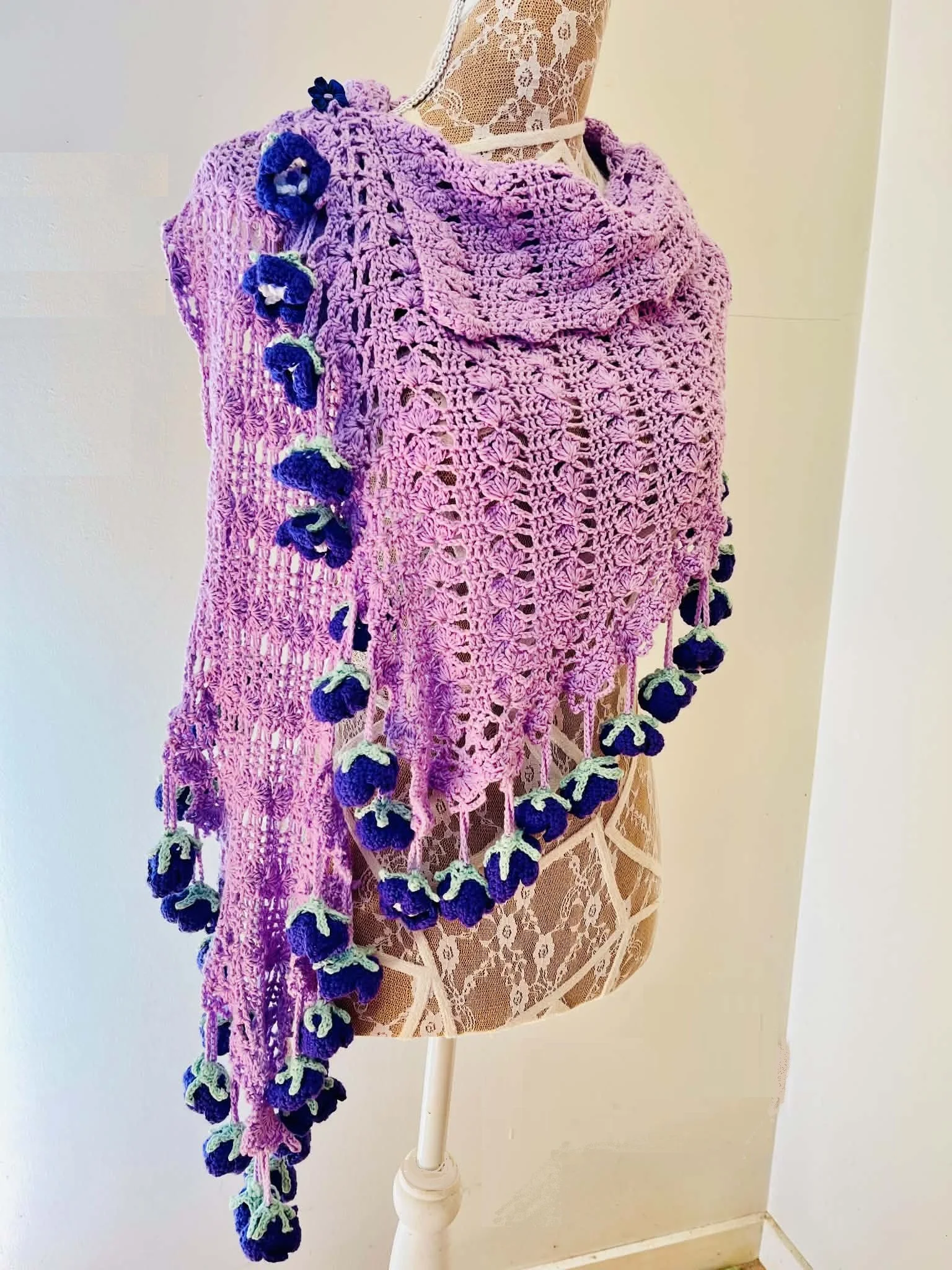
If you’re making shawls, wraps, scarves, or anything wearable, drape matters more than almost anything else.
Drape is basically how the fabric hangs. Does it fall nicely? Does it move? Does it feel soft and elegant?
A yarn with good drape will give you that “flowy” look that makes a crochet piece feel polished and wearable.
Yarns that usually give lovely drape:
bamboo blends
silk blends
alpaca
some soft wool blends
lightweight acrylics with a smooth finish
Yarns that tend to be more structured:
cotton
thick acrylic
firm spun wool
anything that feels stiff straight off the skein
And yes… cotton is beautiful, but if you’re making a large shawl with it, it can get heavy fast. Sometimes that’s exactly what you want. Other times, it turns your lovely floaty design into something that feels like it could double as a picnic rug.
Weather Matters (Especially Here)
I’m in Australia, so I always keep the weather in mind.
A yarn that feels perfect in winter might be completely unbearable in summer, and a light summer yarn might not give you any warmth at all when the cold hits.
For warm weather makes:
Go for breathable fibres like:
cotton
bamboo
linen
cotton blends
They’re light, airy, and won’t have you sweating after ten minutes.
For cooler weather makes:
Warm fibres are your best friend:
wool
alpaca
mohair blends
acrylic (especially for everyday wear)
And if you want warmth without bulk, mohair and alpaca blends can be magic.
Fibre Content: It Changes Everything
Fibre isn’t just about softness. It affects how the yarn behaves while you crochet, how it blocks, how it wears, and how it feels when you actually use it.
Here are the main ones most of us reach for:
Wool
Warm, springy, blocks beautifully, and gives great stitch definition. Wool is one of the best fibres for winter garments and shawls.
Cotton
Strong, breathable, great for stitch definition. Perfect for summer items, bags, home décor, and baby pieces. But it can feel heavy in larger projects.
Acrylic
Affordable, easy to wash, and comes in every colour imaginable. Acrylic is brilliant for blankets and gifts (because not everyone wants to handwash a crochet item like it’s royalty).
Bamboo / Viscose
Soft, silky, and drapey. Makes gorgeous shawls. Can be a little slippery to work with, but the results are worth it.
Alpaca
Soft and warm with beautiful drape, but it can “grow” a little over time, so it’s not always the best choice for structured fitted pieces.
Mohair
Light, fluffy, and dreamy. It adds a halo and makes everything look delicate and luxurious. Not ideal if you want crisp stitch definition, but stunning for soft wraps and airy layers.
Budget Matters (and That’s Completely Okay)
Not every project needs luxury yarn, and not every crocheter has the budget to spend $15–$30 per skein. And honestly? That’s perfectly fine.
Some of the best crochet items I’ve ever seen have been made with affordable acrylic, budget cotton, or sale yarn.
The key is simply choosing a yarn that suits the purpose of the project.
If you’re making a shawl as a special statement piece, you might choose something with a little more drape or softness. But if you’re making a blanket for everyday use, a budget-friendly yarn that washes well can be the smarter option.
There is no “wrong” yarn — only yarn that is better suited to certain projects.
Crochet should be enjoyable, not stressful, and you should never feel pressured to spend more than you’re comfortable with.
Stitch Definition: Do You Want the Pattern to Pop?
If your pattern has texture, lace, cables, or detailed motifs, you’ll want yarn that shows it off.
Smooth yarns are best for crisp stitch detail.
Fluffy yarns (like mohair) can blur everything, which can be beautiful… but it depends on the design.
So before you commit, ask yourself:
Do I want the stitchwork to be the star, or the yarn?
Because sometimes the yarn is the feature, and the stitch pattern is just along for the ride.
Yarn Weight Isn’t Always as Straightforward as It Should Be
We’ve all seen it.
Two yarns can both say “DK” or “worsted”… but one is clearly thicker, and the other is closer to sport weight.
So if you’re swapping yarn, don’t rely only on the label.
Check:
metres per 100g (or per ball)
recommended hook size
how it feels compared to the yarn suggested in the pattern
And if you’re unsure, a quick swatch will tell you immediately if you’re in the right ballpark.
Think About Wear and Tear (Because Real Life Happens)
A shawl made from a delicate silk blend is gorgeous.
But if you’re making something that’s going to be worn daily, tossed on chairs, shoved in a handbag, or dragged around by kids… you need to be practical.
For everyday items, you want yarn that:
won’t pill too quickly
can handle washing
doesn’t stretch out and lose shape
feels good on the skin
This is why acrylic and acrylic blends are still so popular — they’re not “fancy”, but they are reliable.
Care Instructions: Don’t Set Yourself Up for Regret
If the yarn label says “handwash only” and you know deep down you’re not going to do that…
choose a different yarn.
Same goes for gifts. If you’re making something for someone else, you want it to be easy-care unless you know they’ll treat it gently.
Because the last thing you want is your beautiful crochet gift getting ruined in a hot wash two weeks later.
A Quick Note About Felting (Because It Happens!)
Some yarns, especially animal fibres like wool and alpaca, can felt if they’re exposed to heat, agitation, or sudden temperature changes.
Felting can happen accidentally in the washing machine (or even sometimes with rough handling), and once it happens, it’s permanent.
That doesn’t mean you should avoid these fibres — they’re beautiful to work with and often perfect for winter projects — but it does mean you’ll want to check the care instructions and treat the finished piece accordingly.
If you’re making a gift, or something that needs to be easy-care, choosing a yarn that is machine washable (or a superwash wool) can save a lot of heartbreak later.
Colour Choice Can Make or Break a Project
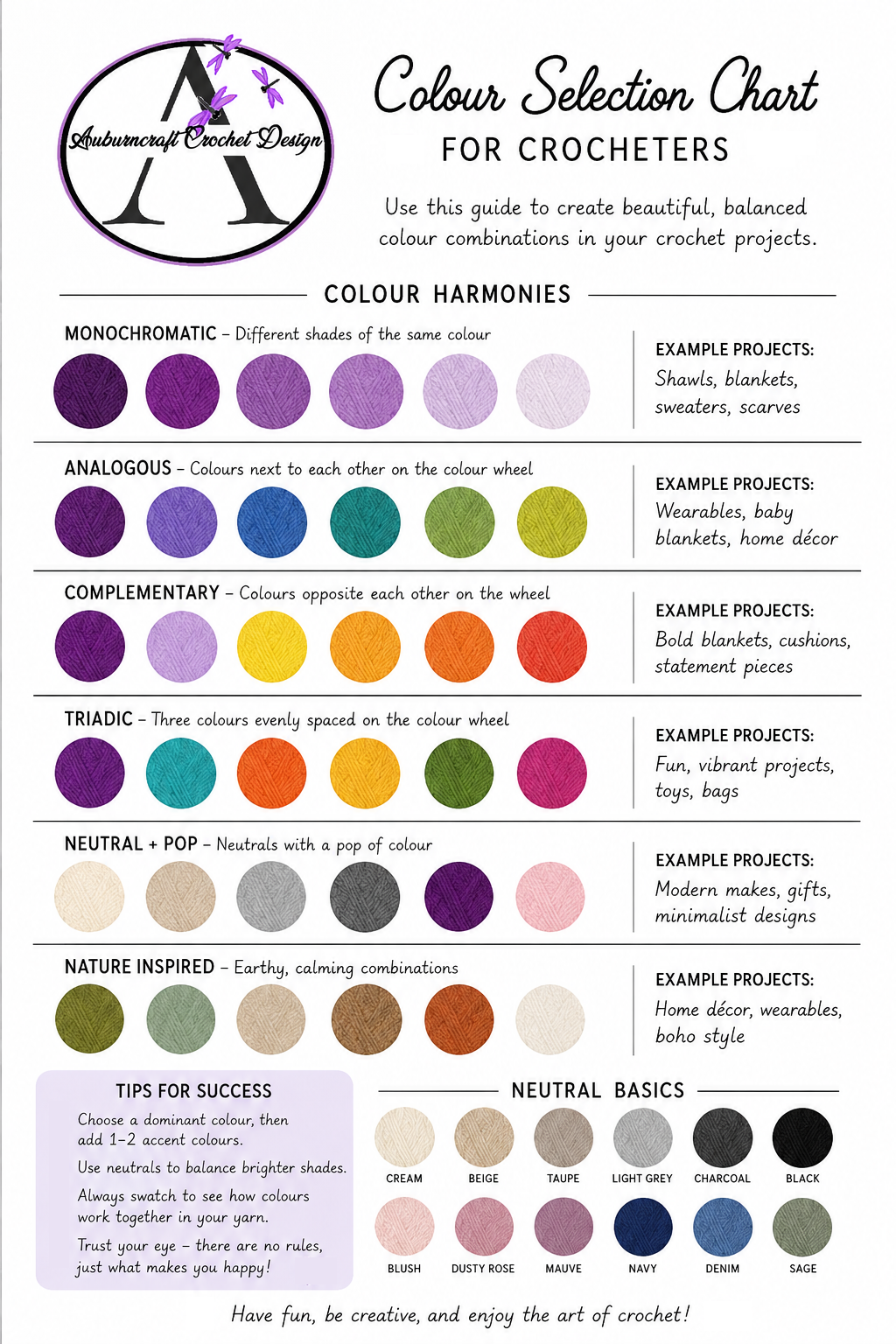
Colour isn’t just about what looks pretty in the skein.
Some colours show stitchwork beautifully, while others can hide it completely.
Light colours show texture clearly
Dark colours can hide stitch detail
Busy variegated yarns can overpower lace or motifs
Tonal yarns are often the sweet spot for textured patterns
If you’ve got a detailed stitch pattern, a solid or lightly tonal yarn will usually let it shine. If the stitch pattern is simple, bold colour changes can look amazing.
But colour choice is also a deeply personal part of the process. It’s just as important to choose colours that genuinely speak to you — the ones you keep coming back to because they simply feel right in your hands and in your imagination.
The main exception is when you’re creating something as a gift. In that case, the focus shifts from what sings to you, to what will resonate with the recipient. A little time spent noticing their favourite colours, clothing tones, or home style can make all the difference in creating something they’ll truly connect with — and help avoid the heartbreak of discovering the blanket you spent 200 hours making shoved in a cupboard… or worse
Swatching: I Know… But It Saves Heartbreak
I know swatching is not everyone’s idea of fun.
But it’s not just about gauge.
A swatch will tell you:
if the fabric is stiff or drapey
if the stitch pattern is clear
if the yarn feels nice once it’s worked up
if the yarn is going to stretch or sag
Even a small swatch can save you from crocheting half a project only to realise you hate the way it’s turning out.
Final Thoughts: Choose Yarn With the End Result in Mind
The best yarn choice isn’t always the prettiest yarn on the shelf.
It’s the yarn that suits:
the drape you want
the climate you’re making it for
the stitch pattern
how it will be worn or used
and how much effort you want to put into caring for it
Once you start thinking this way, yarn shopping becomes much easier… and your finished projects will look and feel exactly the way they should.
And honestly, that’s the goal.
Because we don’t crochet just to make things…
we crochet to make things we actually want to wear and use.