


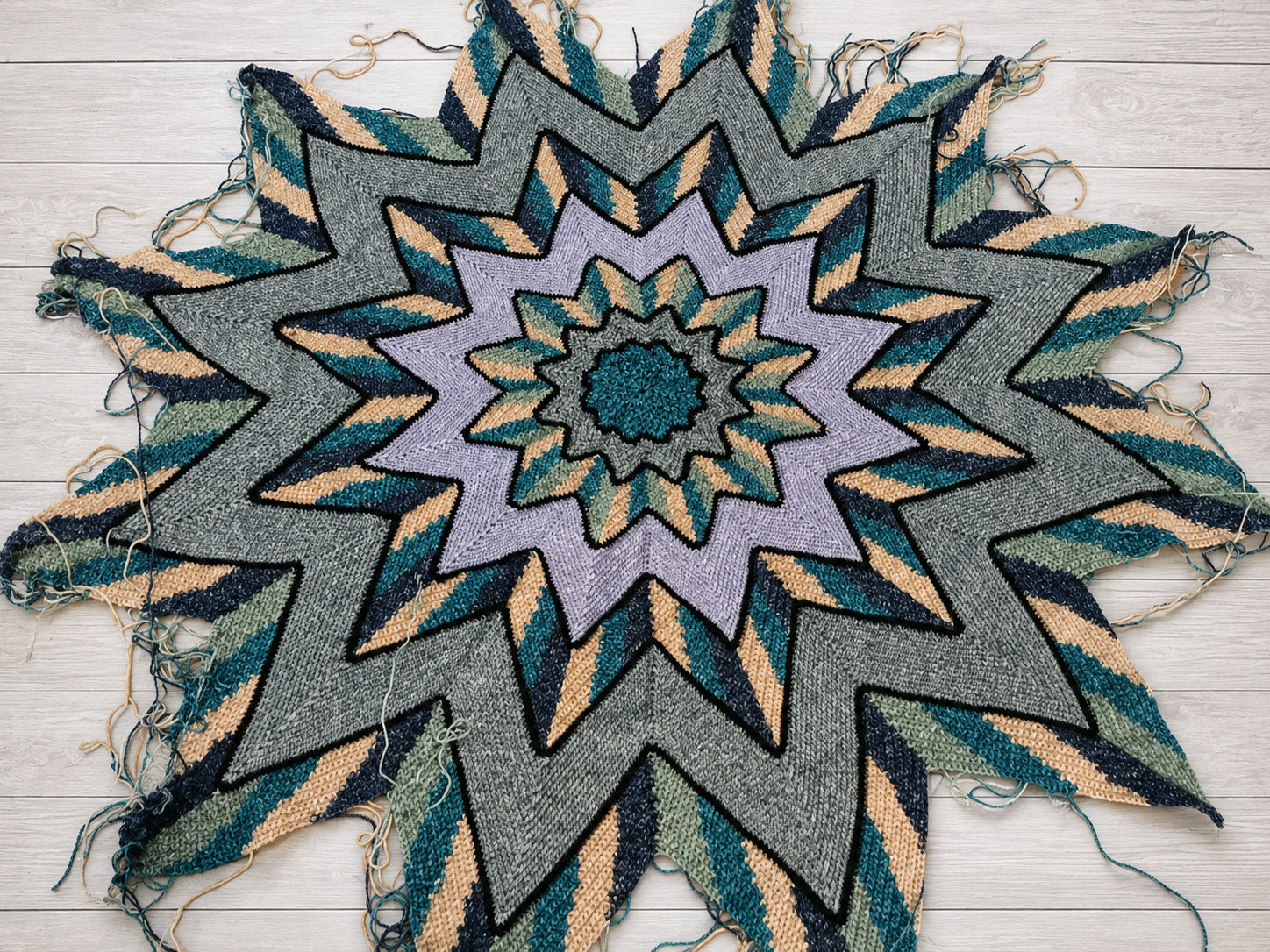
There are many debates in the crochet world.
The correct way to hold your hook.
Whether patterns should include stitch counts on every row.
Which crochet terminology is best - US or UK.
And perhaps one of the most fiercely contested topics of all...
Do you sew in your ends as you go, or leave them until the end?
I have discovered that crocheters tend to fall into one of two camps.
Team "Sew Them In As You Go"
These are the organised crocheters.
The ones whose project bags are tidy.
The ones who finish a blanket and immediately photograph it because there isn't a single end left to weave in.
There are plenty of advantages to sewing in your ends as you go.
Your work area stays neat and tidy.
There aren't dozens of yarn tails dangling from your project.
Finishing a project actually feels finished.
You avoid the seemingly million hours it takes to deal with the "blanket of a thousand ends" waiting for you at the finish line.
For large projects, especially blankets made from multiple colours, weaving in ends as you go can save hours of work at the end.
There is one small catch... but we'll come back to that in a minute.
It is sensible.
It is efficient.
It is responsible.
But is it wise?
Team "I'll Do It Later"
This group often works on the principle that Future Me will handle it.
Current Me simply wants to crochet.
The argument for leaving ends until later is surprisingly strong.
What if you discover an error?
What if that stitch count that seemed correct twenty rows ago turns out not to be correct?
What if four corners secretly morphed into five?
If the ends haven't been woven in, frogging (the art of unravelling your work) is usually quick. Sure, it's still painful because you've just undone all that work... but at least it's doable.
Pull the yarn.
Undo the stitches.
Grudgingly fix it.
Pretend the mistake never happened.
But if every end has been sewn in as though a hurricane is on its way and every end is anchoring the house down...
Well.
You may find yourself performing crochet surgery with scissors and, most likely, a few swear words, while questioning every life choice that led to this moment.
The Case for Controlled Procrastination
Personally, I think there's solid evidence that, in the case of yarn ends, procrastination is a perfectly valid option.
For projects that are repetitive and well established, weaving in ends as you go makes perfect sense.
For new designs, complex stitch patterns, sections where changes may still occur, or maybe you're just having one of those days and left home without your brain (I do that a lot), leaving the ends until you're certain everything is in order can save a lot of frustration.
Unwoven ends are a bit like an insurance policy.
Sure, you'll eventually have to pay for it one way or another, but it's nice to have as a backstop in case of an emergency. Especially if that emergency happens to involve the incident of the fifth corner.
Does it matter if your project looks like a hot mess while you're in creation mode?
Not really.
The Real Truth
The truth is, I can see the appeal of both methods.
I love the idea of sewing in ends as I go. The project stays tidy, the work area is neater, and when the last stitch is completed there isn't a mountain of finishing work waiting for me.
On the other hand, I also design crochet patterns. If I discover an error several rounds back, those neatly sewn-in ends can suddenly become my worst enemy. Frogging a project is frustrating enough without having to unpick every carefully secured end first.
So where do I stand in the great crochet debate?
Somewhere firmly on the fence.
Sometimes I sew in ends as I go.
Sometimes I leave them until the end.
And occasionally I spend so much time debating which approach to take that I could probably have sewn in half the ends already.
Perhaps the best method is simply the one that leaves you muttering the least by the time the project is finished.
The Leadlight Blanket
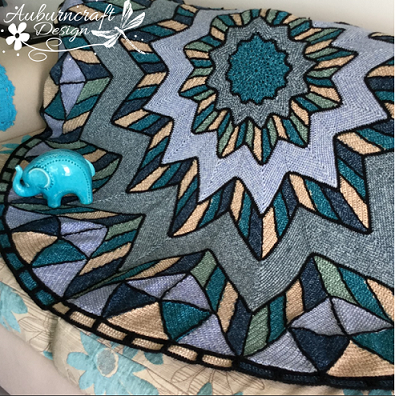
One of the best examples I can think of is my Leadlight Blanket.
At one stage there were 96 bobbins attached to the work. Every row was worked in one direction and then back again to keep the colours crisp. It remains one of the most technically demanding designs I've ever created.
The finished blanket is stunning, and I'm incredibly proud of it.
The loose ends...
Not so much.
It became the perfect reminder that no matter which camp you're in, eventually those ends have to be dealt with.
So tell me...
Are you Team Sew-As-You-Go or Team Future-Me-Can-Deal-With-It?