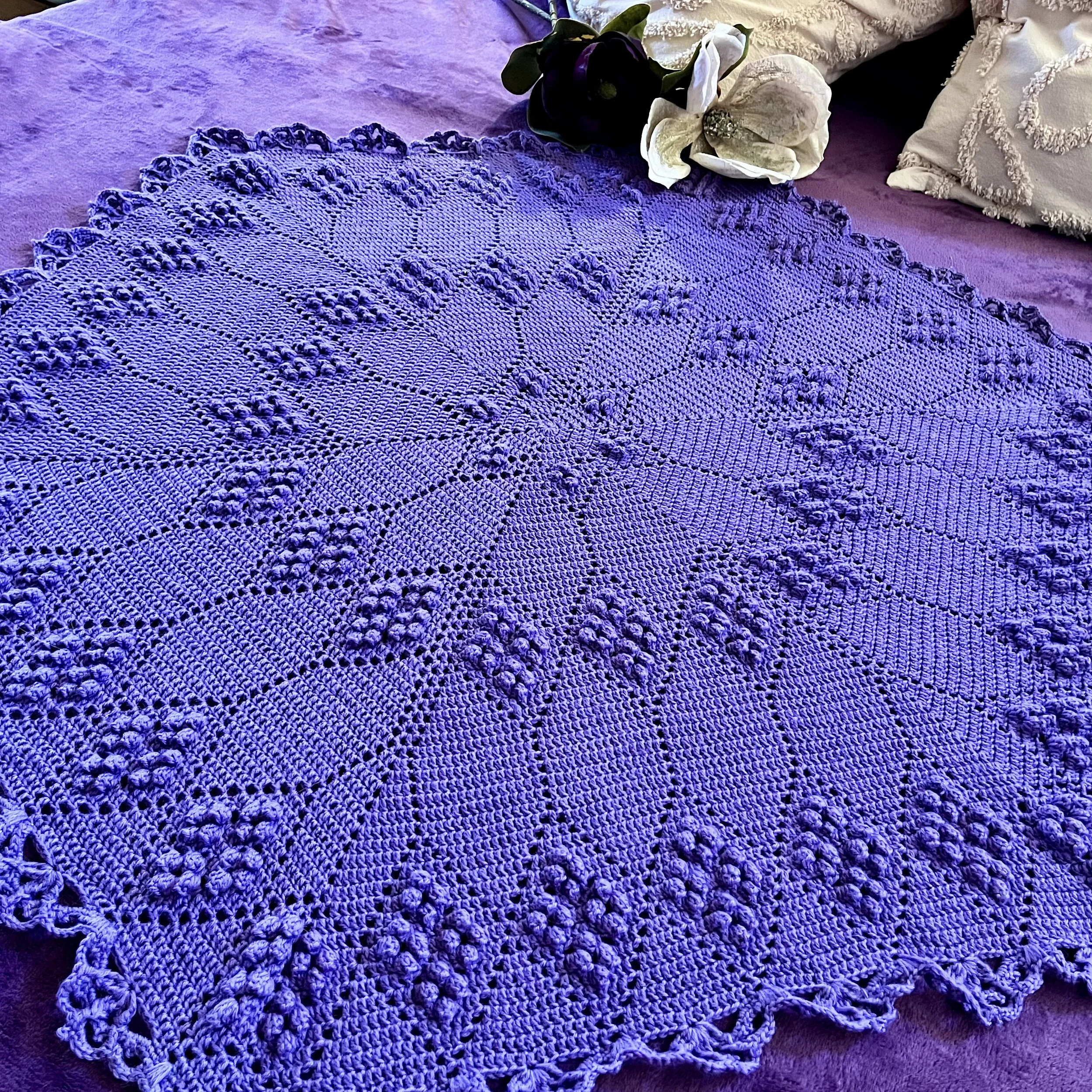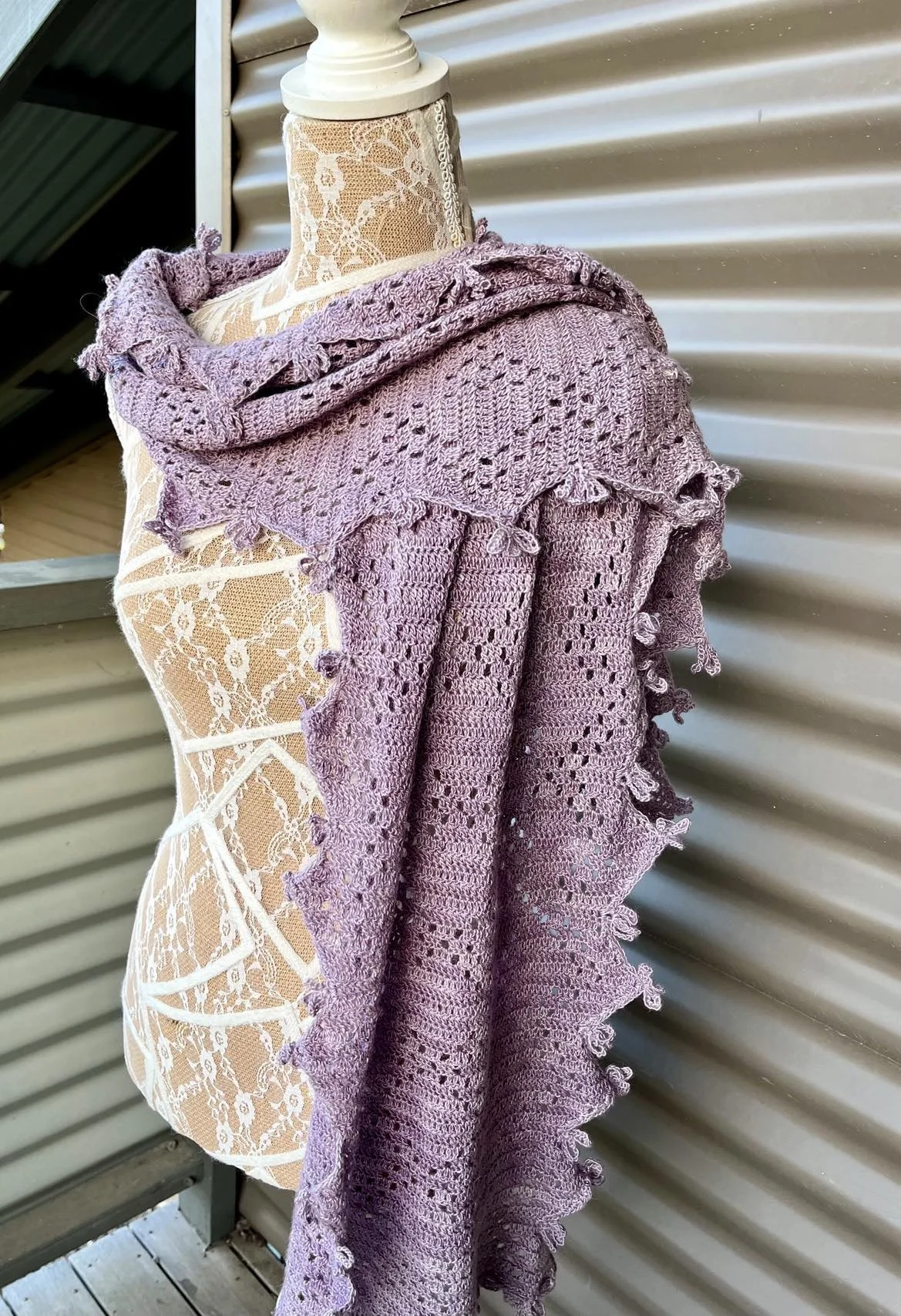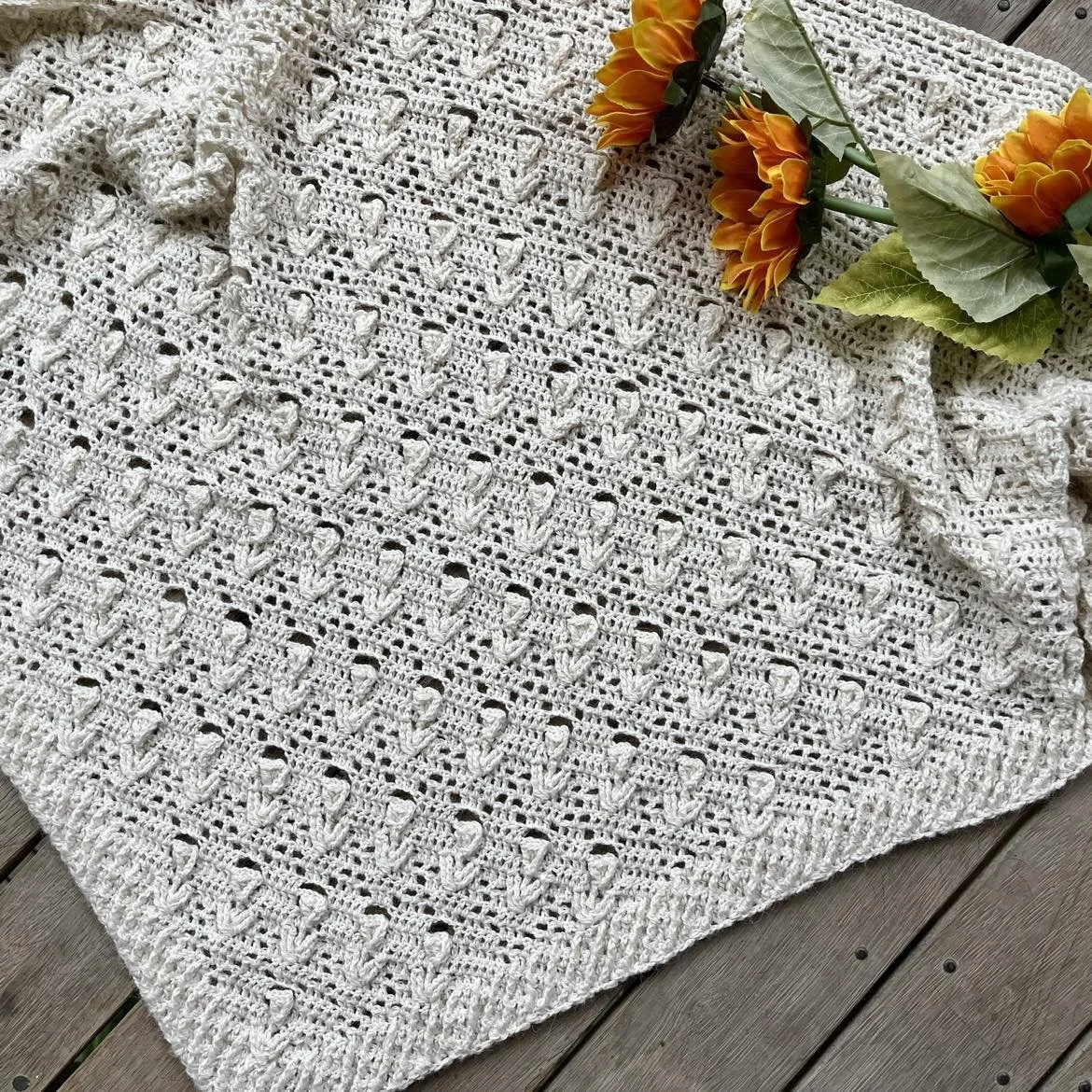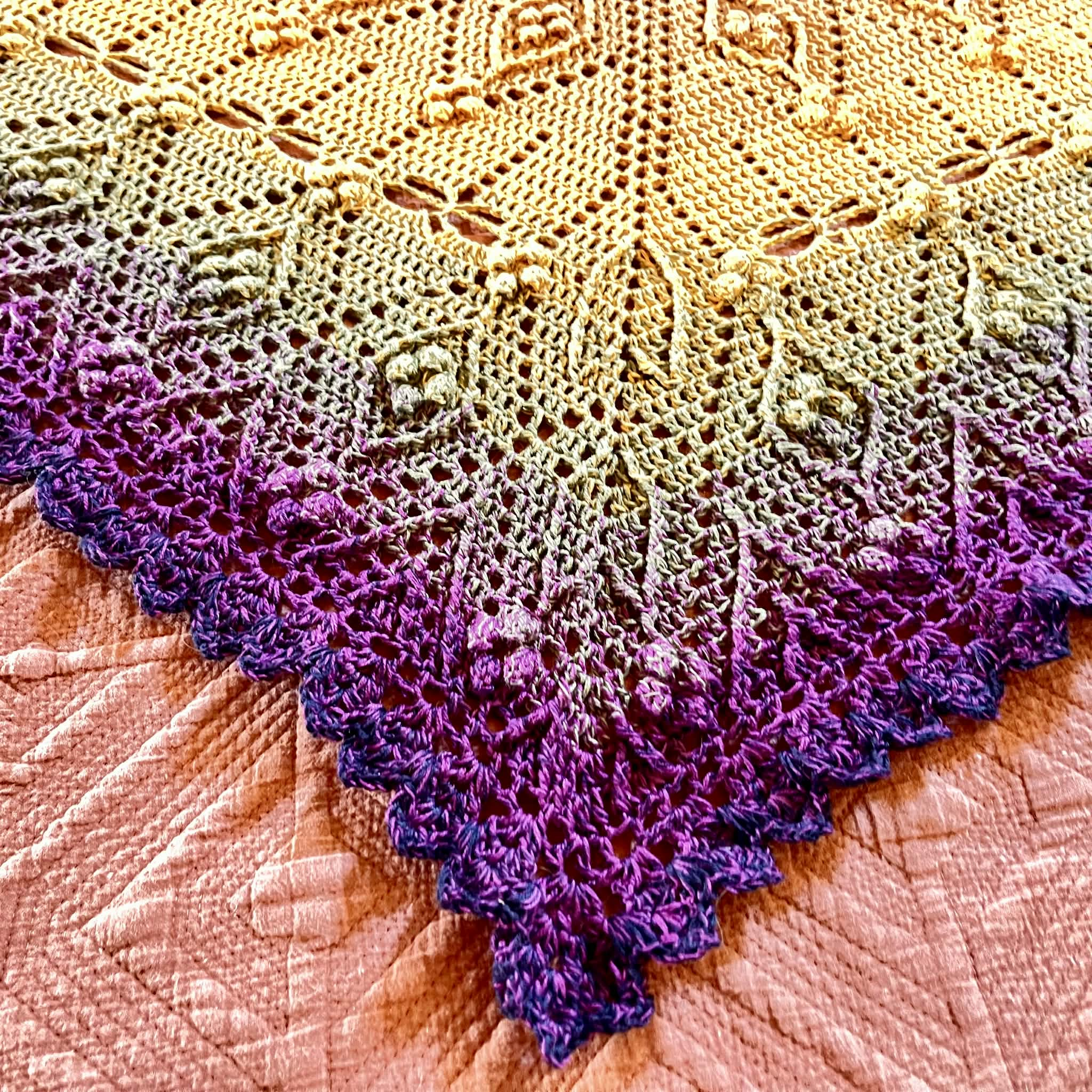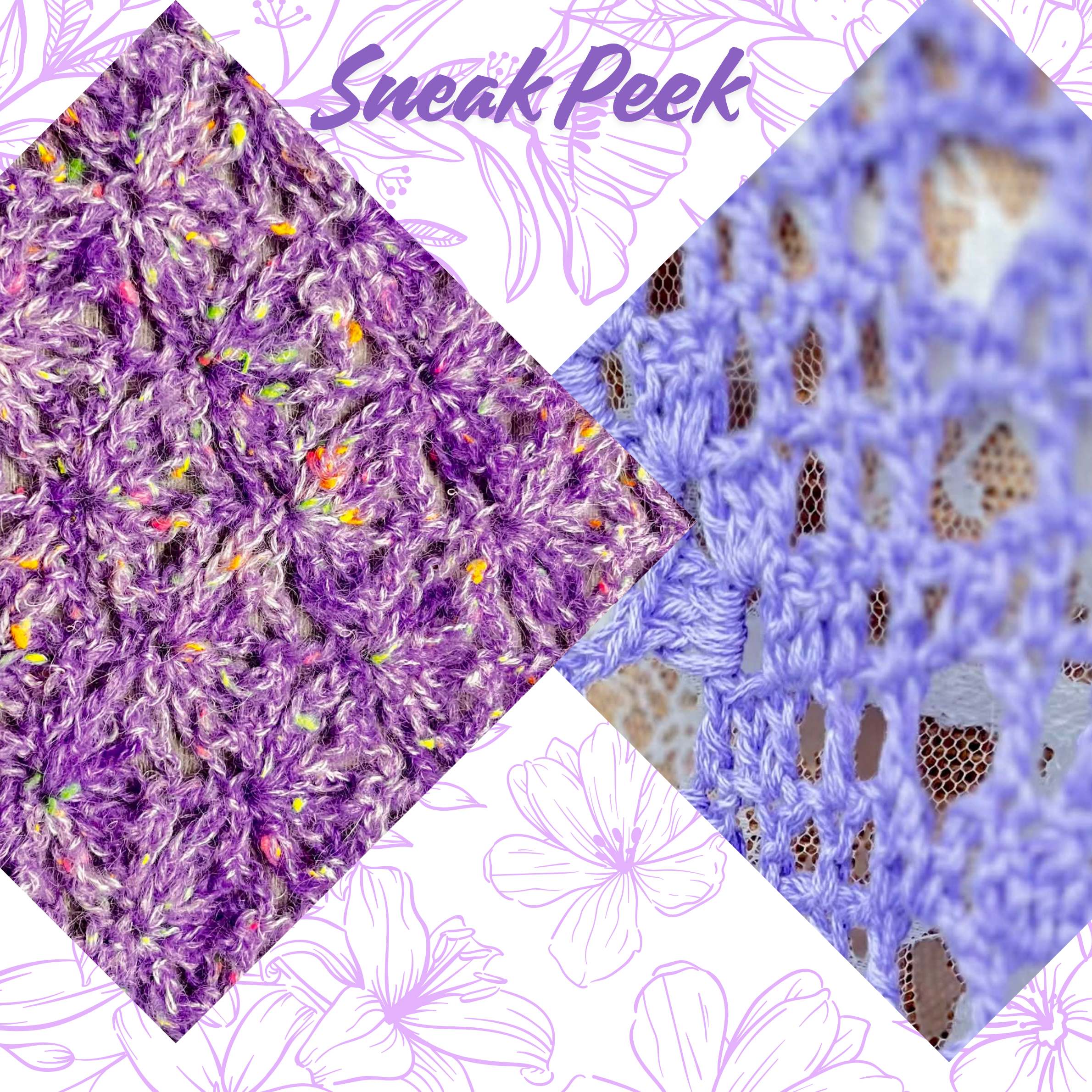
Still Playing With Tulle - The Court of Quiet Mischief

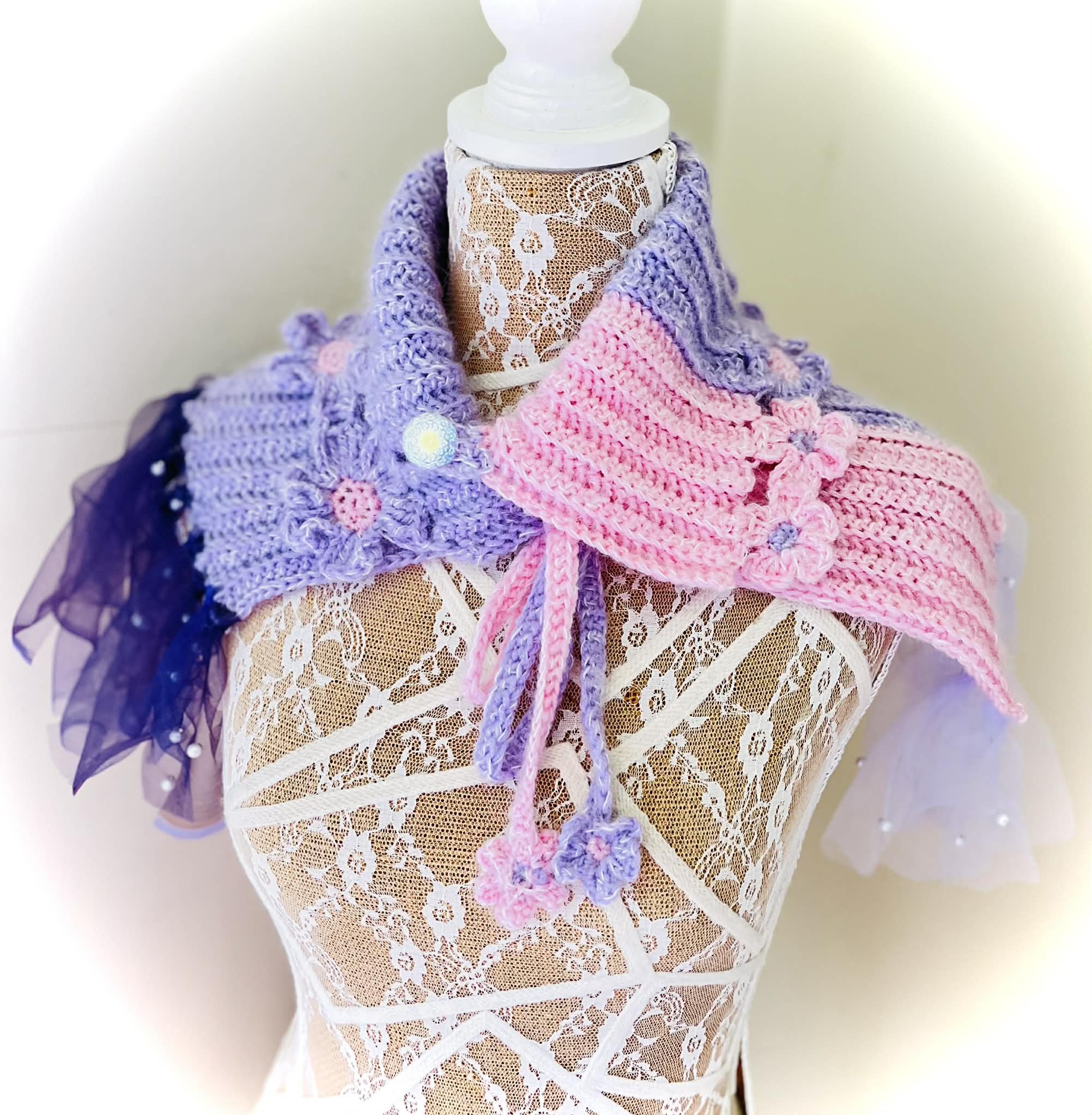
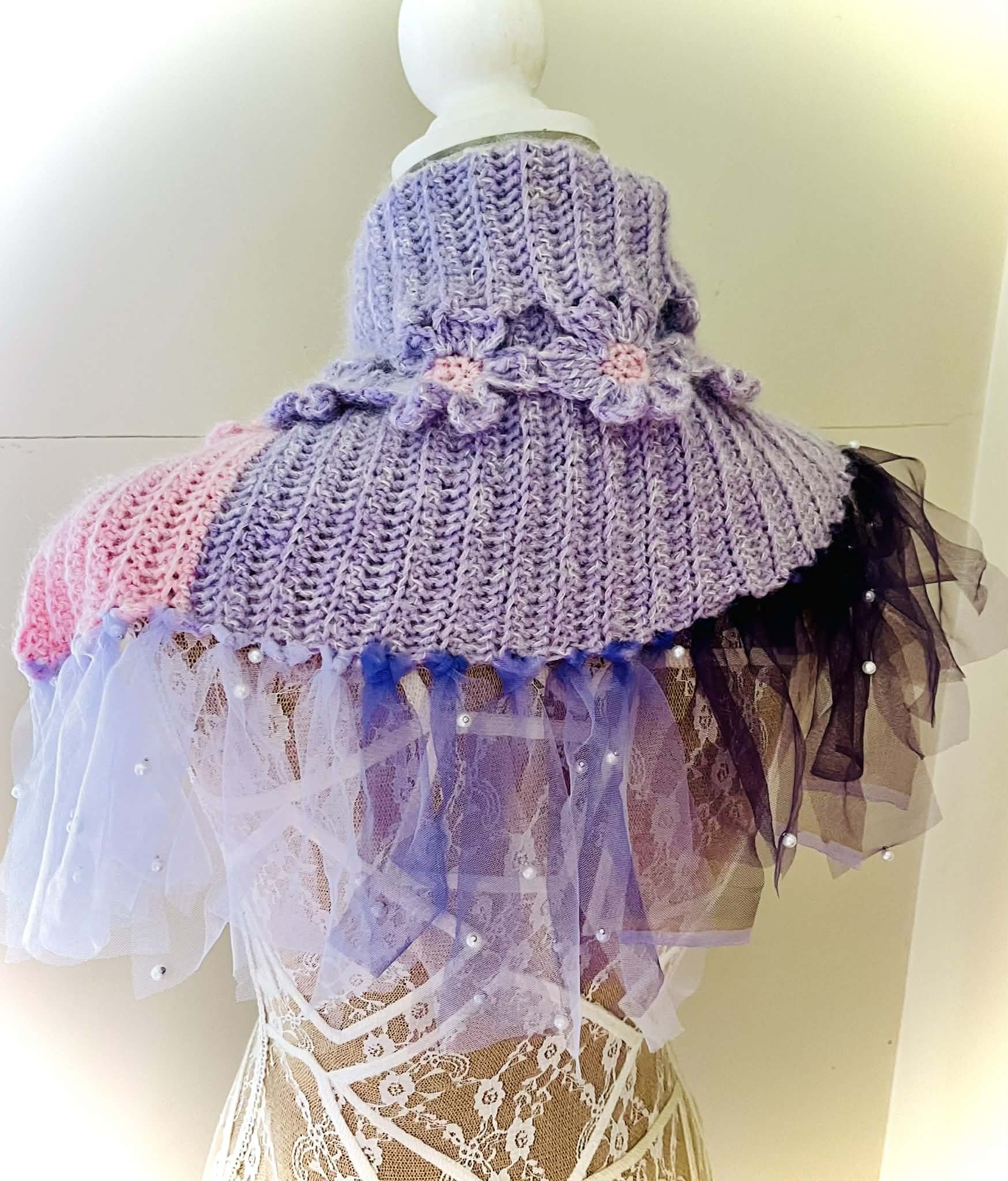
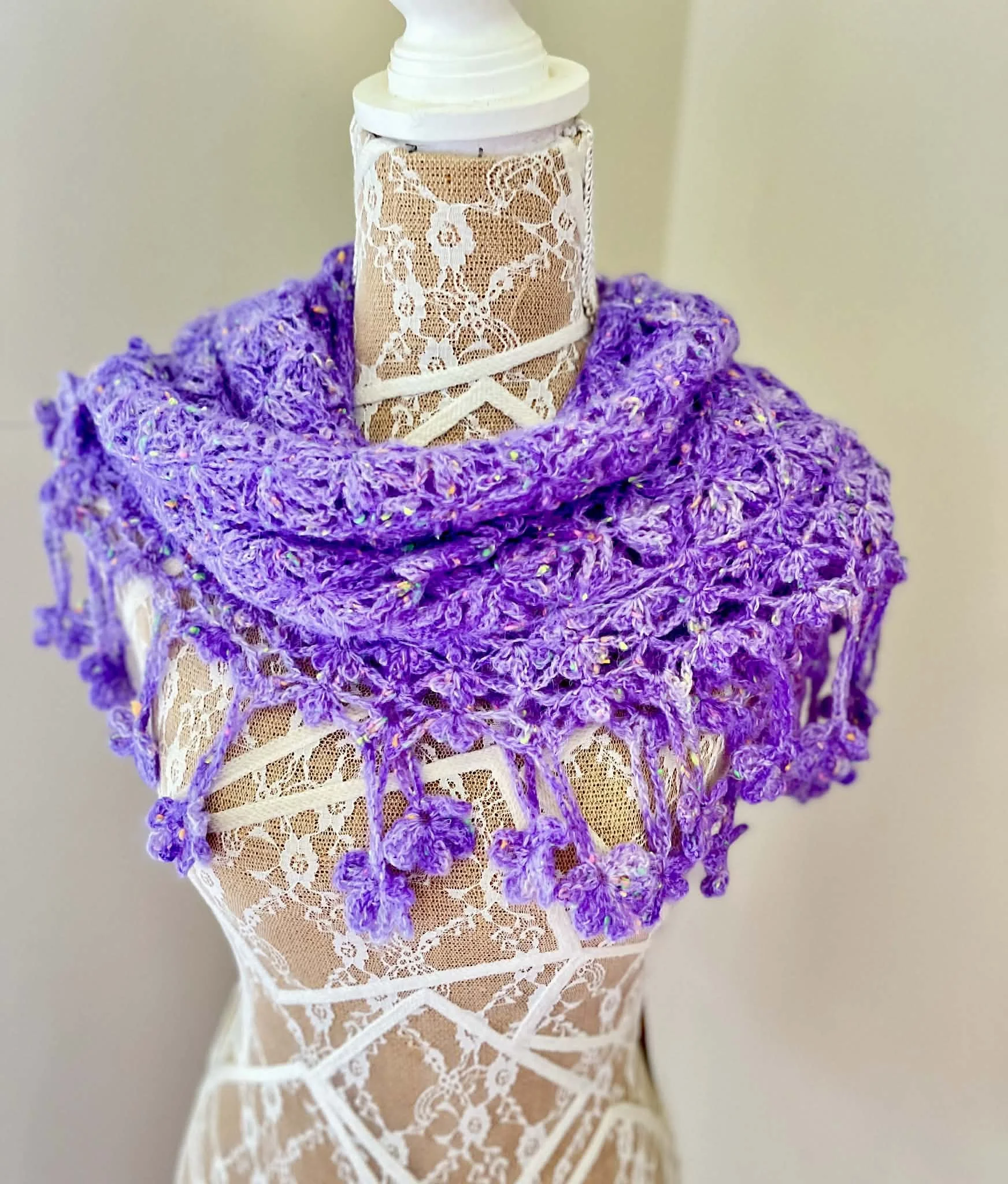
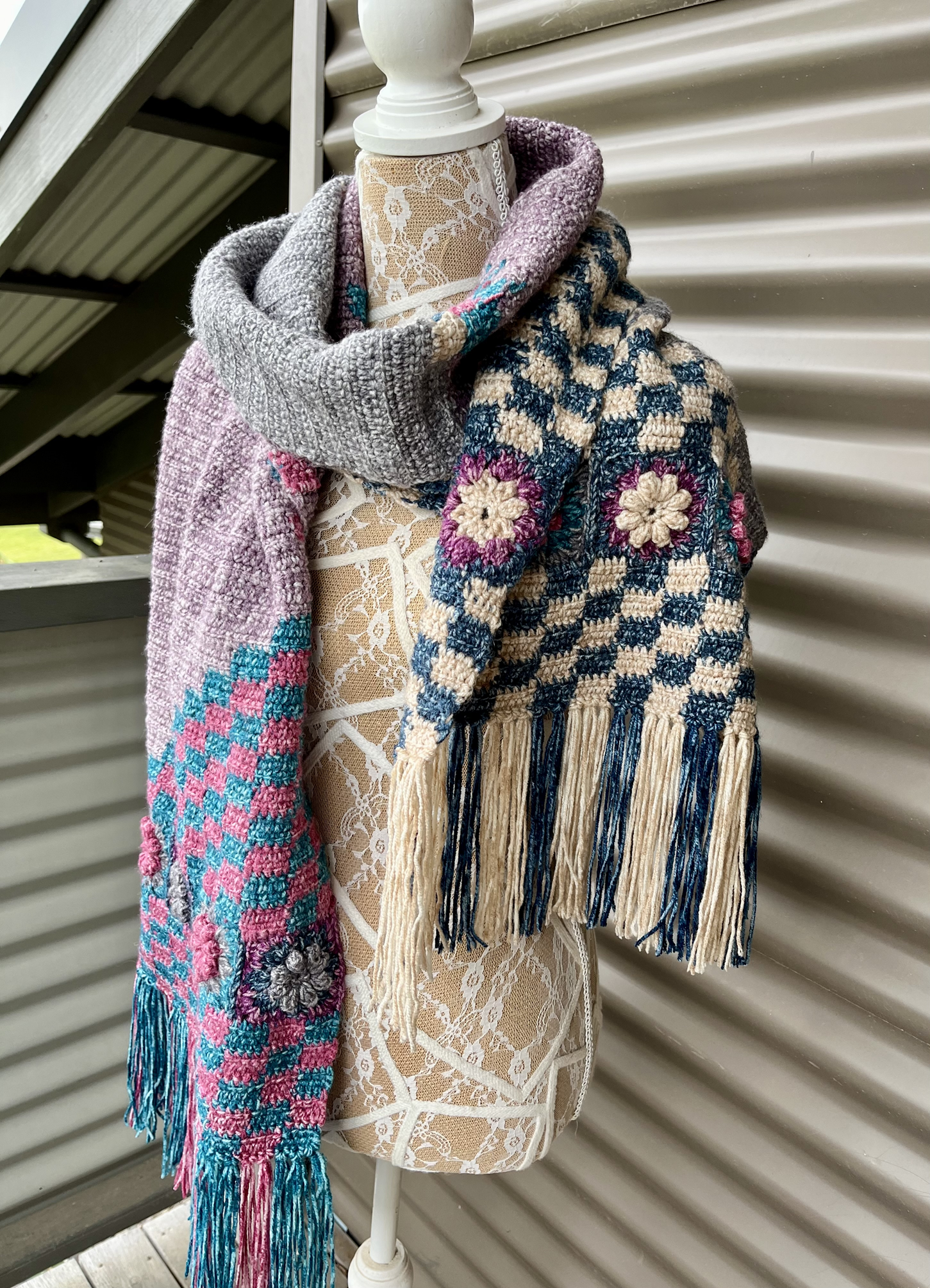
Tulle + Crochet? Yes please.

I still had the bug and felt the need to play with tulle again.

Tulle often brings to mind ballet skirts, weddings, and fairies… but it really is so much more than that. And if you’re thinking of the old-style tulle with that stiff, scratchy feel, I promise this is different. Soft tulle is light, drapey, and surprisingly easy to work with — and it adds such a unique touch to crochet.

This is my second venture into using tulle alongside yarn, and I absolutely love the result.

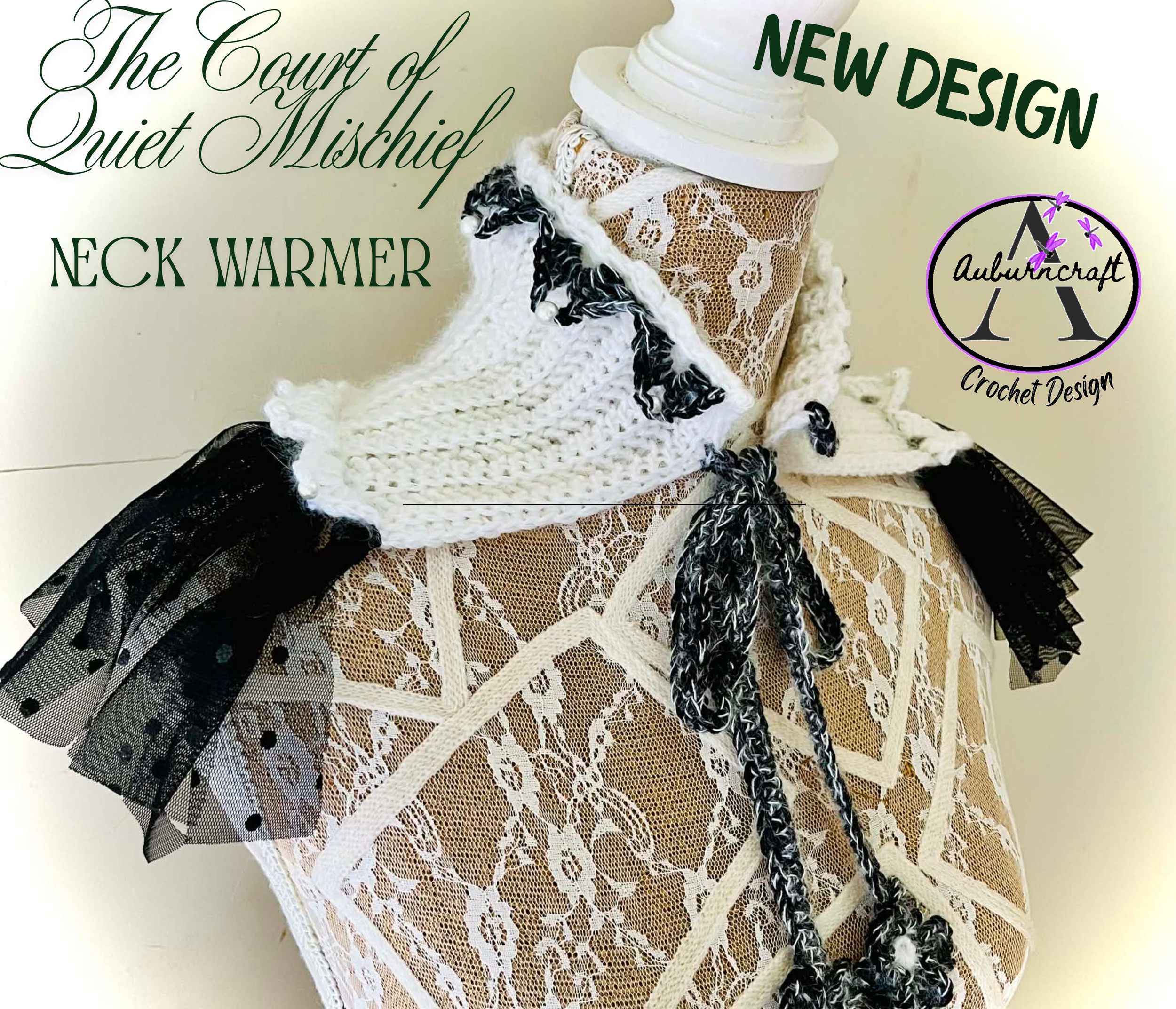
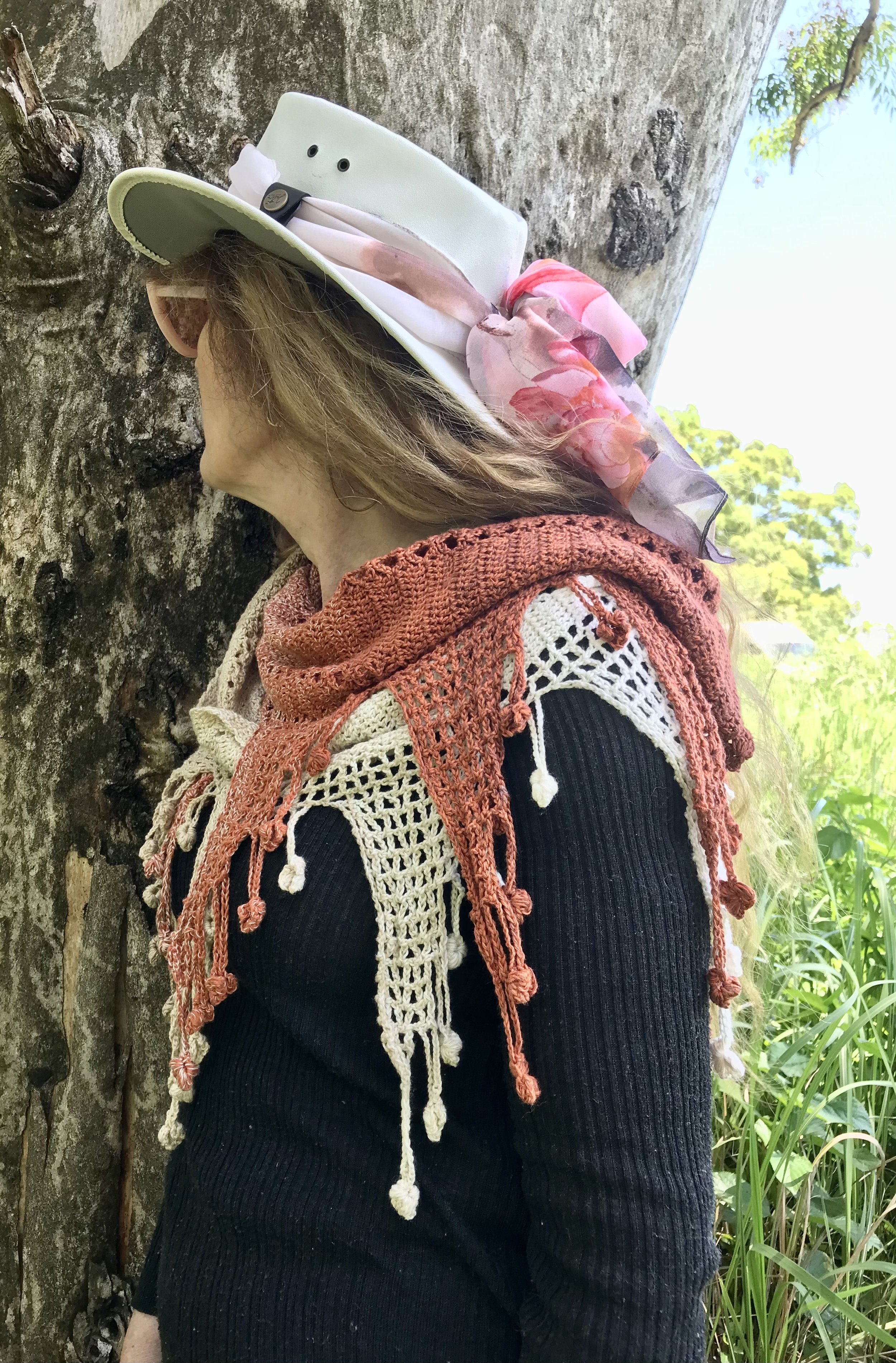
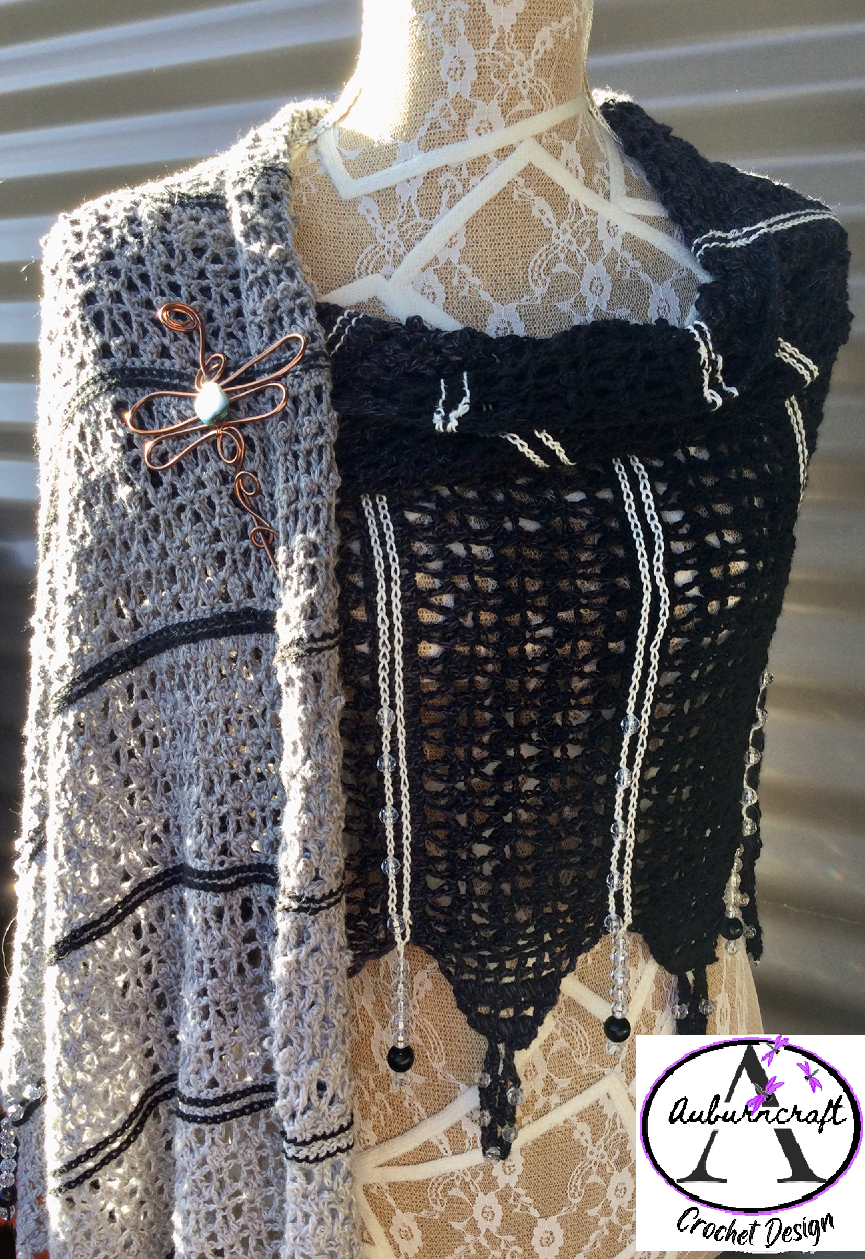
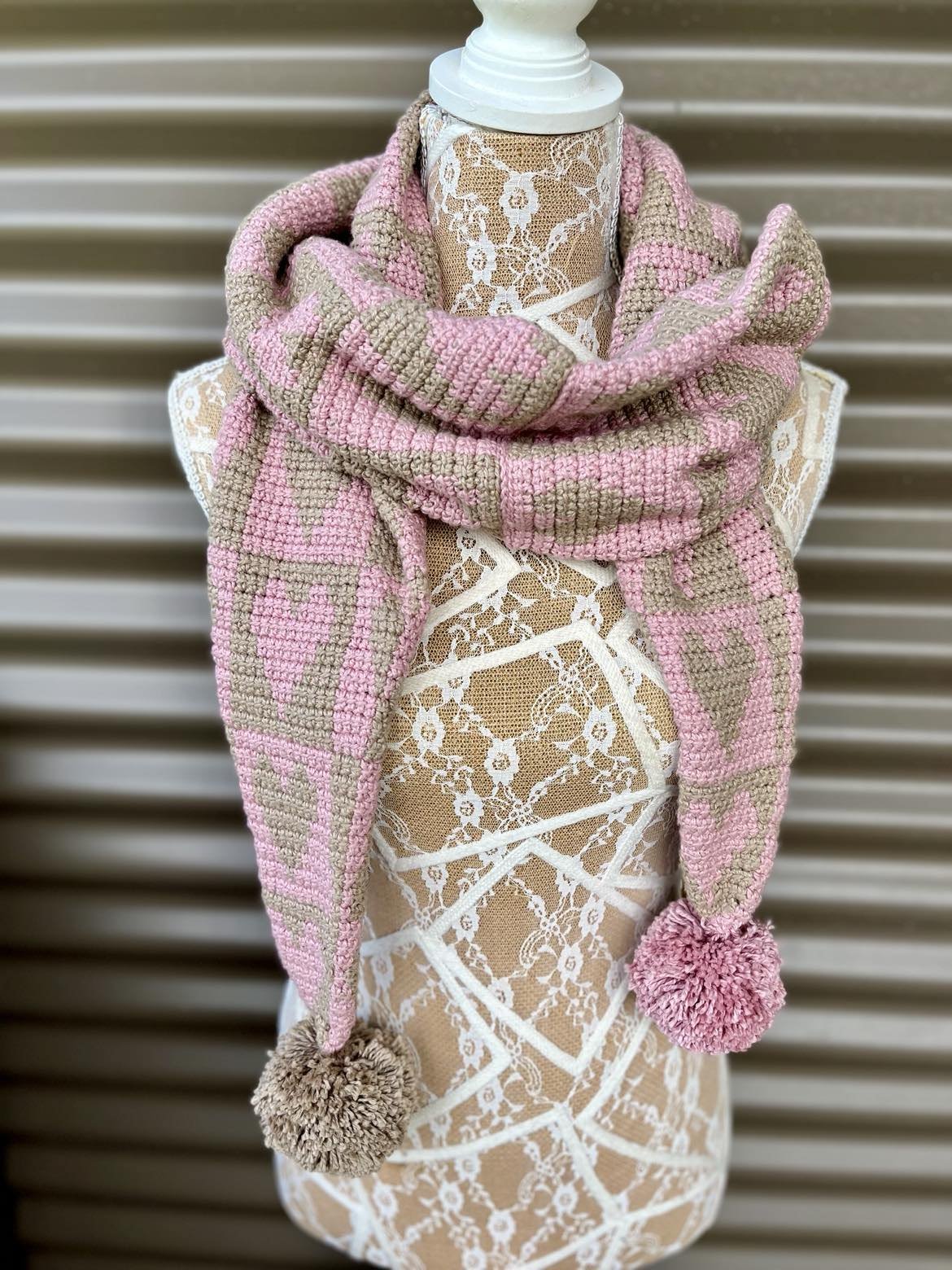
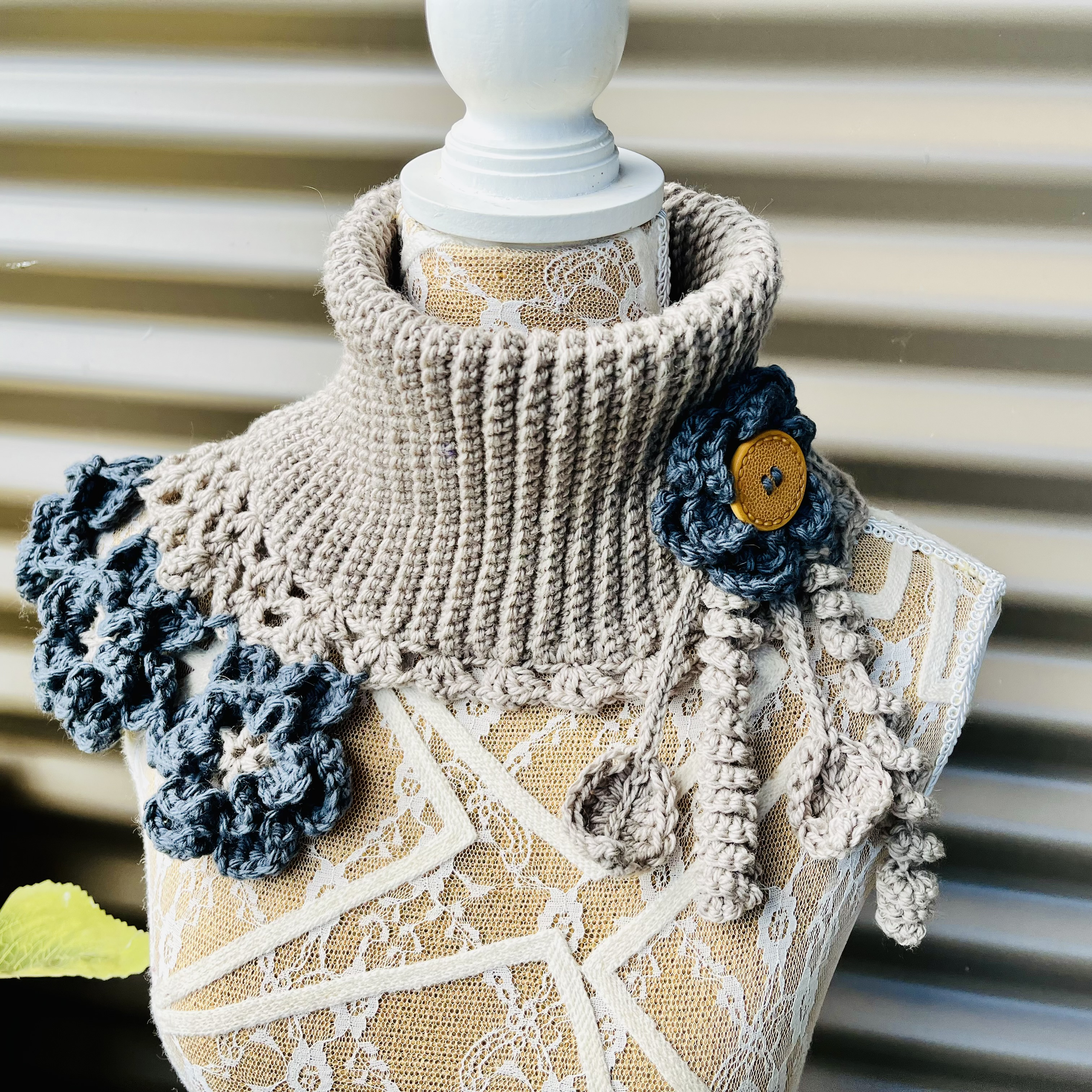
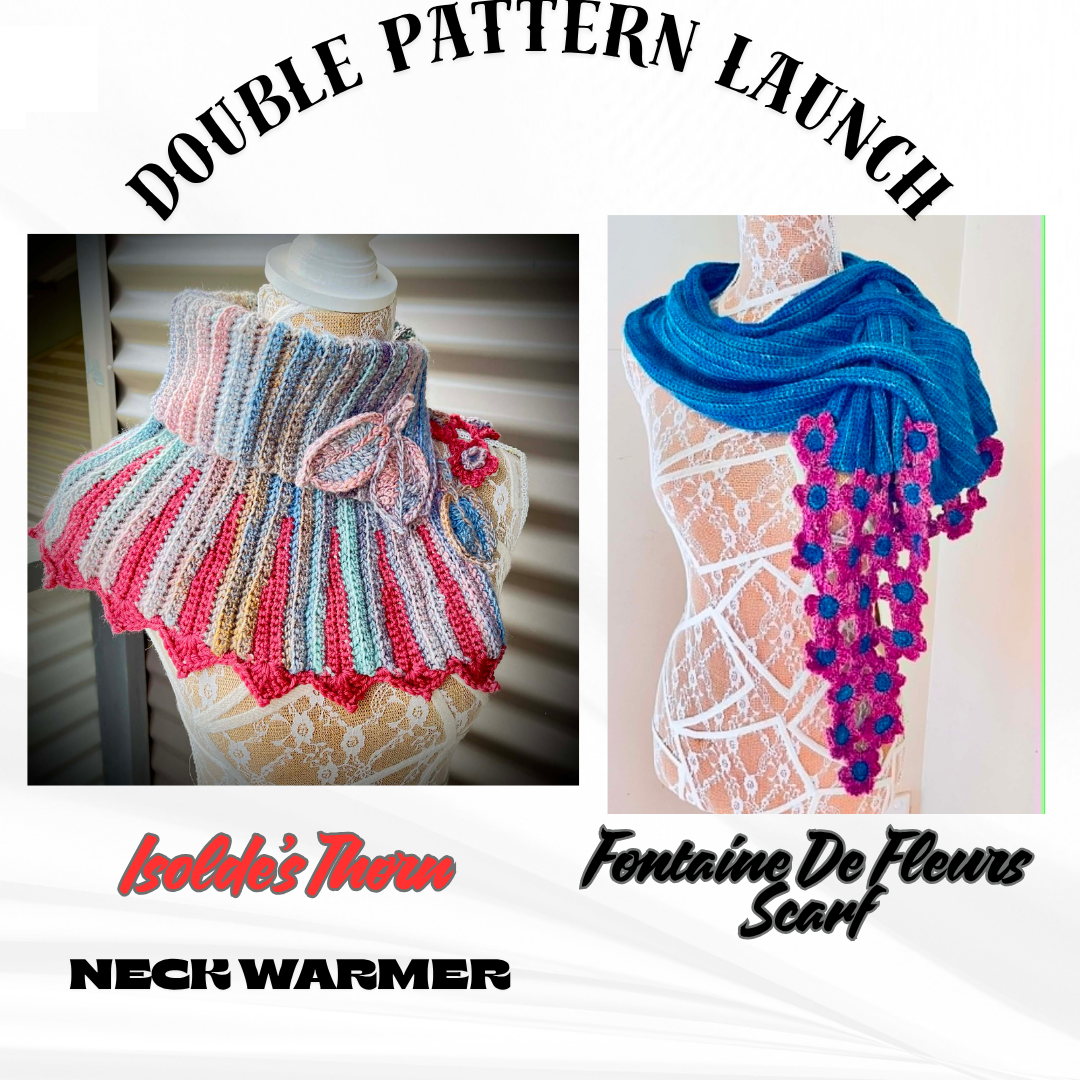
The finished piece is a unique neck warmer collar that works up quickly and makes a real statement. It’s a super fast make and can easily be sized up or down depending on how you like the fit. Definitely one for those who love to stand out a little.

For this design, I used multiple yarns held together to create a soft, textured fabric that still feels light and wearable. That said, it could also be made using a single yarn if you prefer to simplify it.

Hooks

5 mm (H)
6 mm (J)

Yarn Notes

Yarns are held together as specified in the instructions. All yarns listed are required.

Yarn amounts are based on a 45-row neck warmer. Additional yarn will be required if you choose to make a larger size.

Materials

C1: Prestige Yarns Moseta (Kid Mohair & Silk), Colour 06/001
Lace weight
25 g / 210 m / 229.6 yd per skein
72% Kid Mohair, 28% Silk
Approx. total used (if gauge is met): 127 m / 138.8 yd

C2: Bendigo Woollen Mills Luxury 4 ply (Fingering), Colour Frost
200 g ball – 720 m / 787.4 yd
Approx. total used (if gauge is met): 101 m / 110.4 yd

C3: Patons Baby Dreamtime Merino 4 ply (Fingering), Colour Black
Approx. total used (if gauge is met): 25 m / 27.3 yd

Soft tulle: 1/4 metre / 0.27 yd

Stitch markers
Scissors
Needle and cotton thread (for adding beads)
22 x 6 mm pearl beads

If you want, I can also add a closing paragraph that gently nudges them to join the members section + grab the code, without sounding salesy.

If you’d like to grab this one with a launch day discount, make sure you’re signed up as a free member. The promo code will be posted in the Members Section on release day and will be dated, so you’ll know exactly how long you have to use it.

I’ll still send out an email to let everyone know the pattern is live, but instead of including the code in the email, you’ll need to pop over to the website and log in to access it. It’s a small change, but it helps support my website and keeps it worthwhile for me to keep designing new patterns.

And while you’re there, take a look through the free patterns too. I’m slowly giving them all a makeover and adding more as I go.

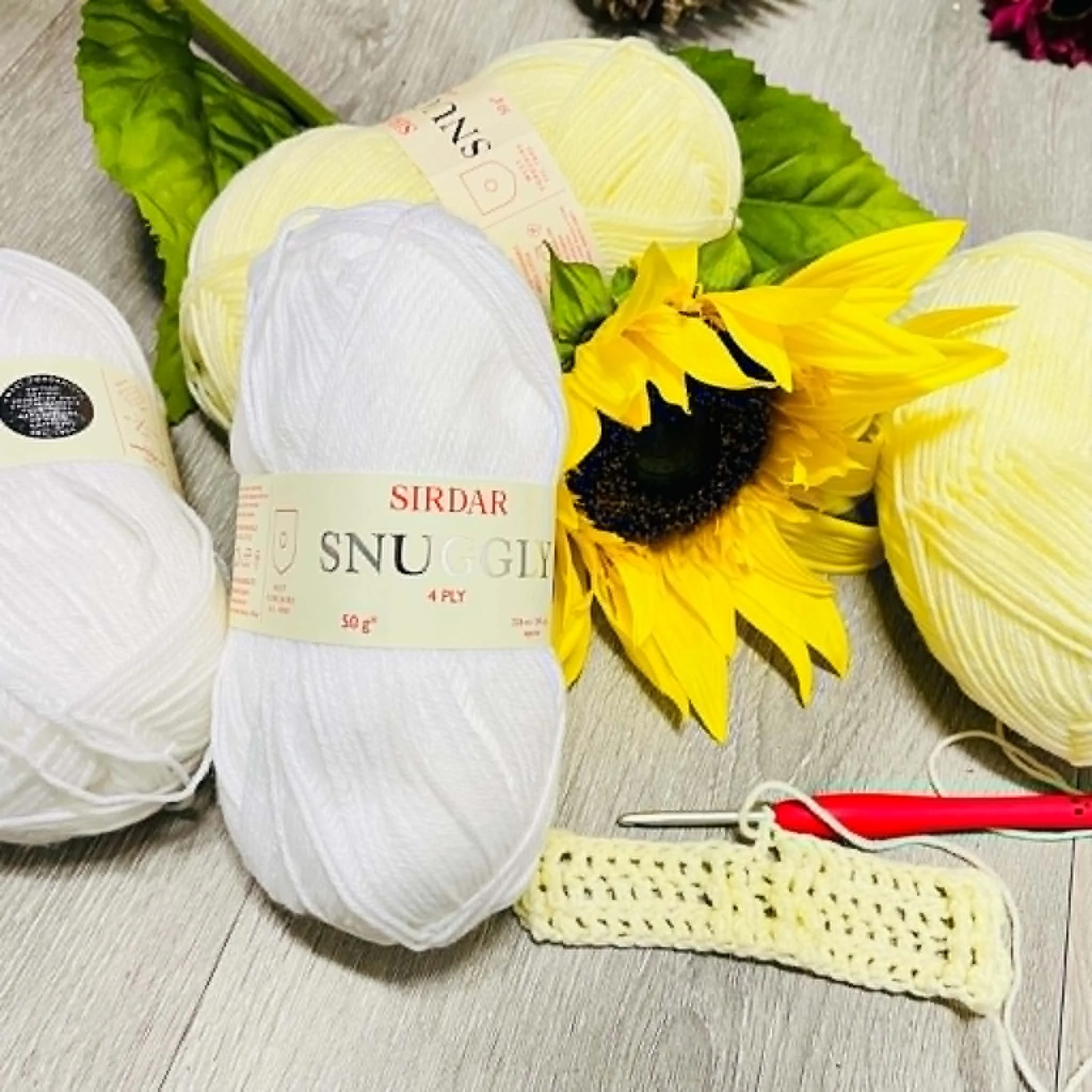
t's time for a close look at Sirdar Snuggly 4 Ply!

The good and the bad.

As always, this is just my personal opinion!

The hard facts

Composition: 55% Nylon / 45% Acrylic

Construction: Smooth plied yarn

Weight: 50 g ball

Length: Approximately 226 metres (247 yards)

Weight Category: 4 Ply / Fingering

Recommended Hook: 3.25–4.0 mm

Machine Washable: Yes

Range: A wide range of solid colours and baby shades

My Opinion

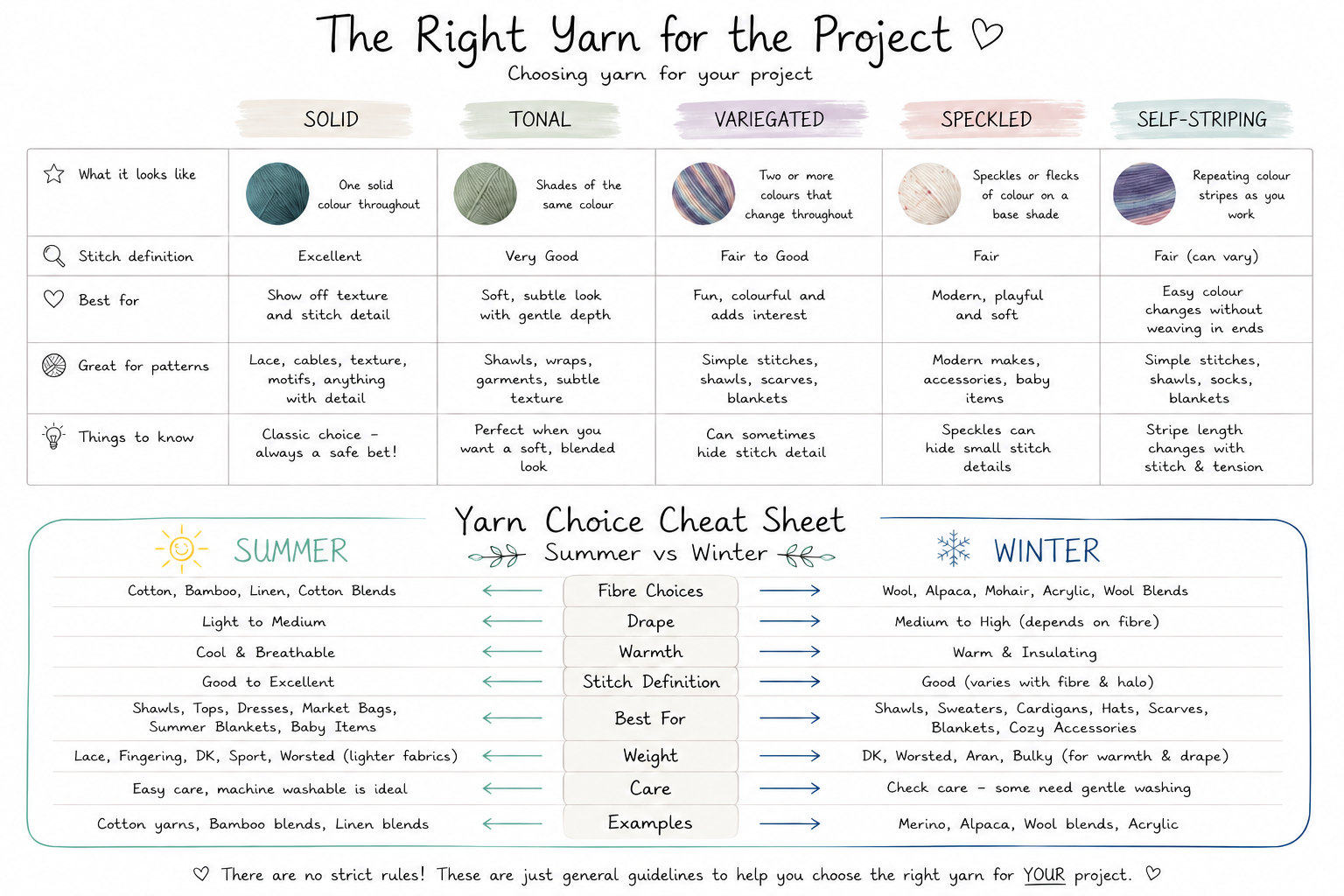
I've recently been working with Sirdar Snuggly 4 Ply, and overall I've really enjoyed using it.

The first thing you notice is just how soft it is. It's designed with babies in mind, and it certainly feels that way. It glides nicely over the hook, produces neat stitches, and has a lovely drape.

It's the sort of yarn that makes you understand why it has been around for years.

One thing I particularly liked was how easy it was to crochet with. There was very little splitting, and it behaved itself beautifully throughout the project.

And let's be honest... yarn that behaves itself deserves recognition.

My Project

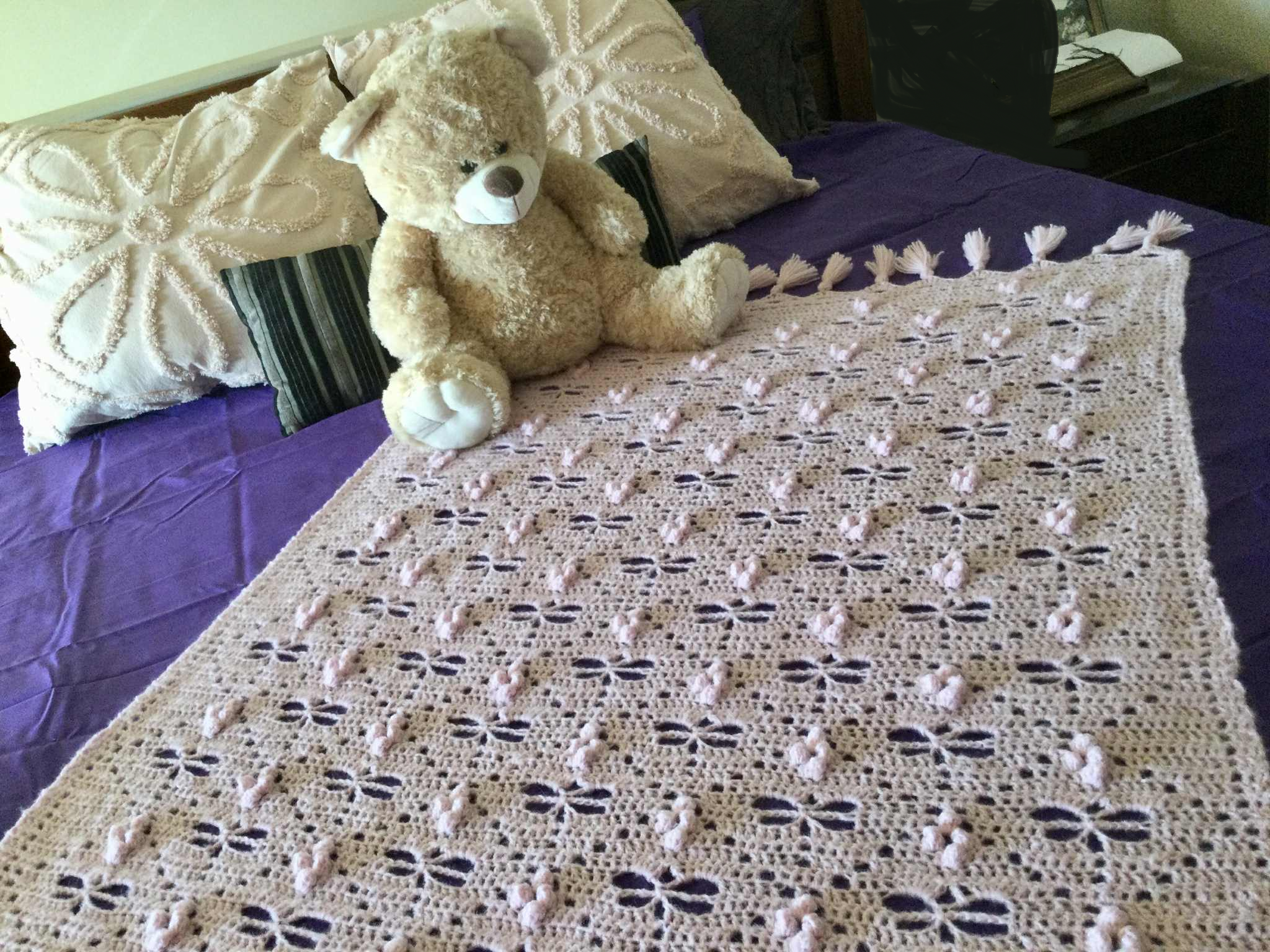
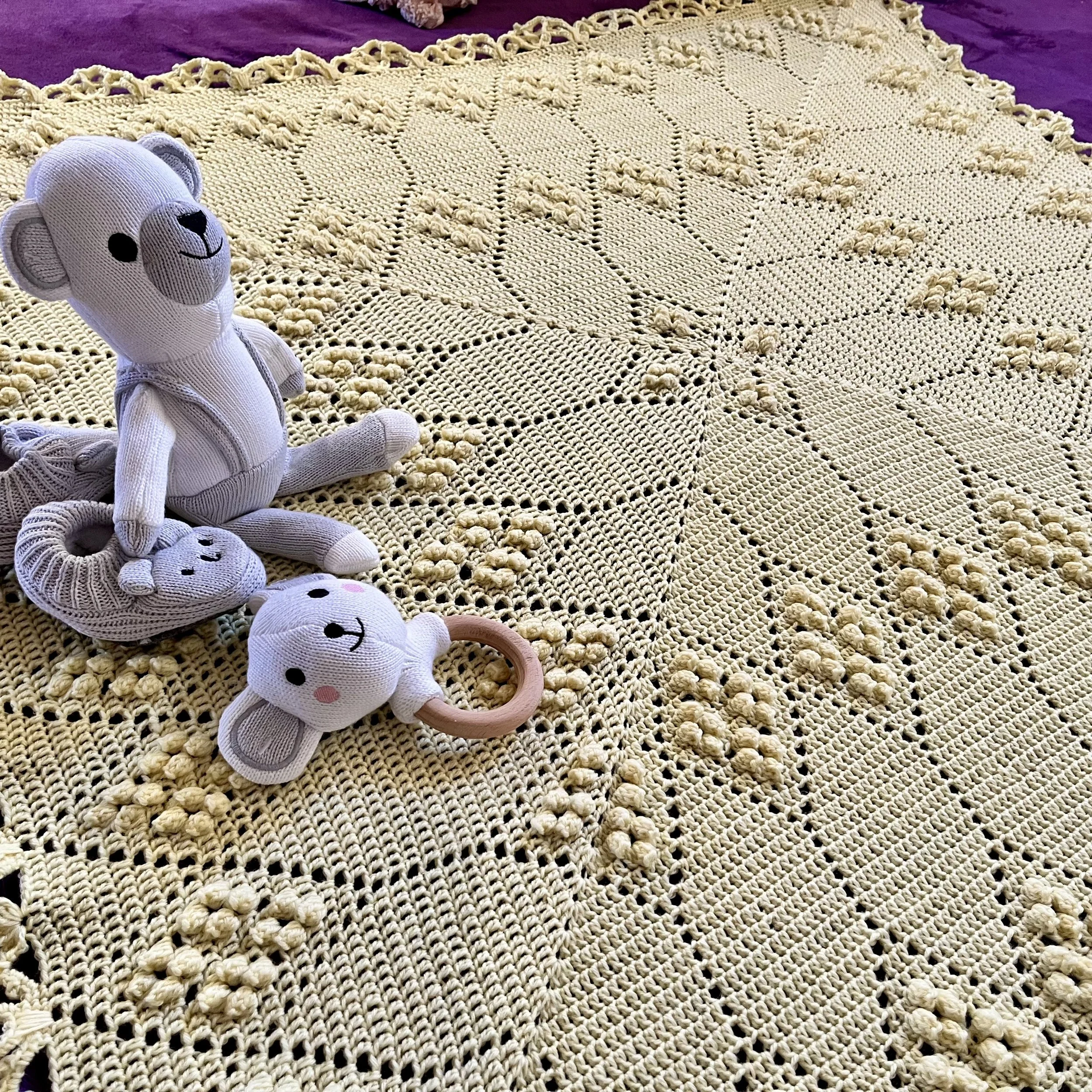
I used Sirdar Snuggly 4 Ply to create a baby blanket, and it produced a lovely soft fabric that would be perfect for little hands and sensitive skin.

The finished fabric feels cosy without being heavy, making it an excellent choice for blankets, baby garments and delicate accessories.

For

Beautifully soft

This is definitely one of the softest acrylic blends I've worked with in a long time. It has a lovely gentle feel that's perfect for baby projects.

Easy to crochet

The yarn flowed smoothly through my fingers, didn't constantly split, and made for a relaxing crochet experience.

Great stitch definition

Even with delicate stitch patterns, everything remained nice and crisp.

Good colour selection

Sirdar offers a lovely range of classic baby shades along with brighter colours, making it easy to find something suitable for almost any baby project.

Readily available

Unlike some specialty yarns that require overseas ordering, Sirdar is stocked by many Australian yarn retailers, making it fairly easy to source.

Against

Only 50 g per ball

This is probably my biggest criticism.

While the yarn itself is lovely, larger projects require quite a few balls. You can find yourself joining new balls fairly regularly, which isn't the end of the world—but it's something to factor into both the cost and planning of your project.

Inconsistent yarn thickness between colours

This surprised me.

I purchased several colours at the same time—Pastel Pink, White, Pastel Lemon and Lilac.

While the pink, white and lemon all appeared to be very consistent, the Lilac was noticeably thinner than the others.

Unfortunately, this became quite problematic because I was using multiple colours within the same project. The difference in thickness affected the overall look and forced me to rethink my design as I went.

I don't know whether this was simply a batch issue or something more widespread, but it's certainly something worth mentioning.

Consistency is one of those things you don't really think about... until it isn't there.

Overall

Sirdar Snuggly 4 Ply is a beautifully soft yarn that's a pleasure to work with and an excellent choice for baby blankets, baby clothing and lightweight accessories.

Its softness, stitch definition and ease of use make it easy to recommend.

The only things that stop it from being close to perfect are the relatively small 50 g balls—which mean lots of joins in larger projects—and the inconsistency I experienced between colour thicknesses.

Hopefully my experience with the Lilac was simply an isolated manufacturing issue, because aside from that, it was a genuinely lovely yarn to crochet with.

Would I use it again?

Absolutely.

I'd just be a little more cautious when mixing different colours within the same project.

Granny Style Filet Crochet Blanket - Where The Dragonflies Dance

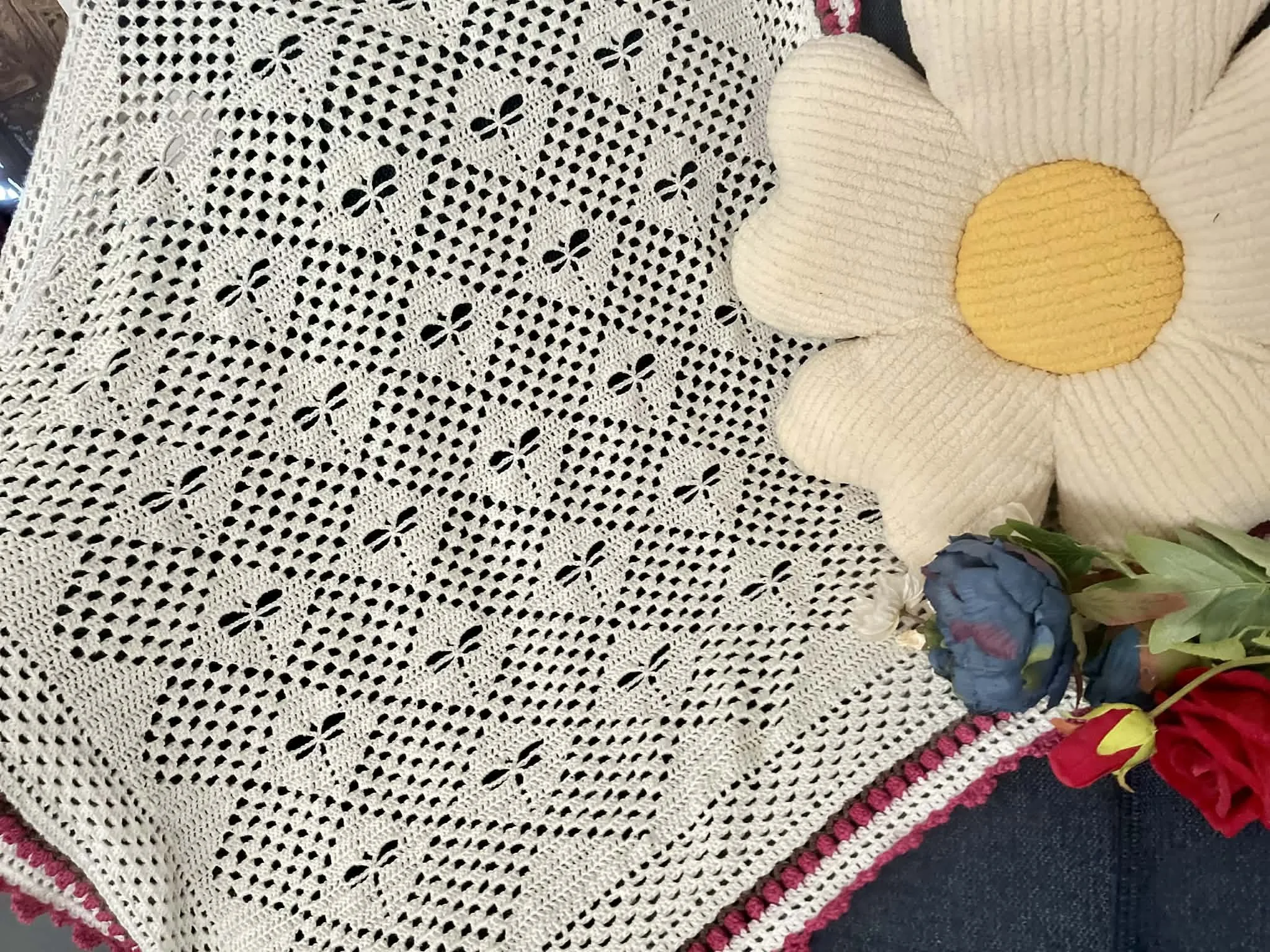
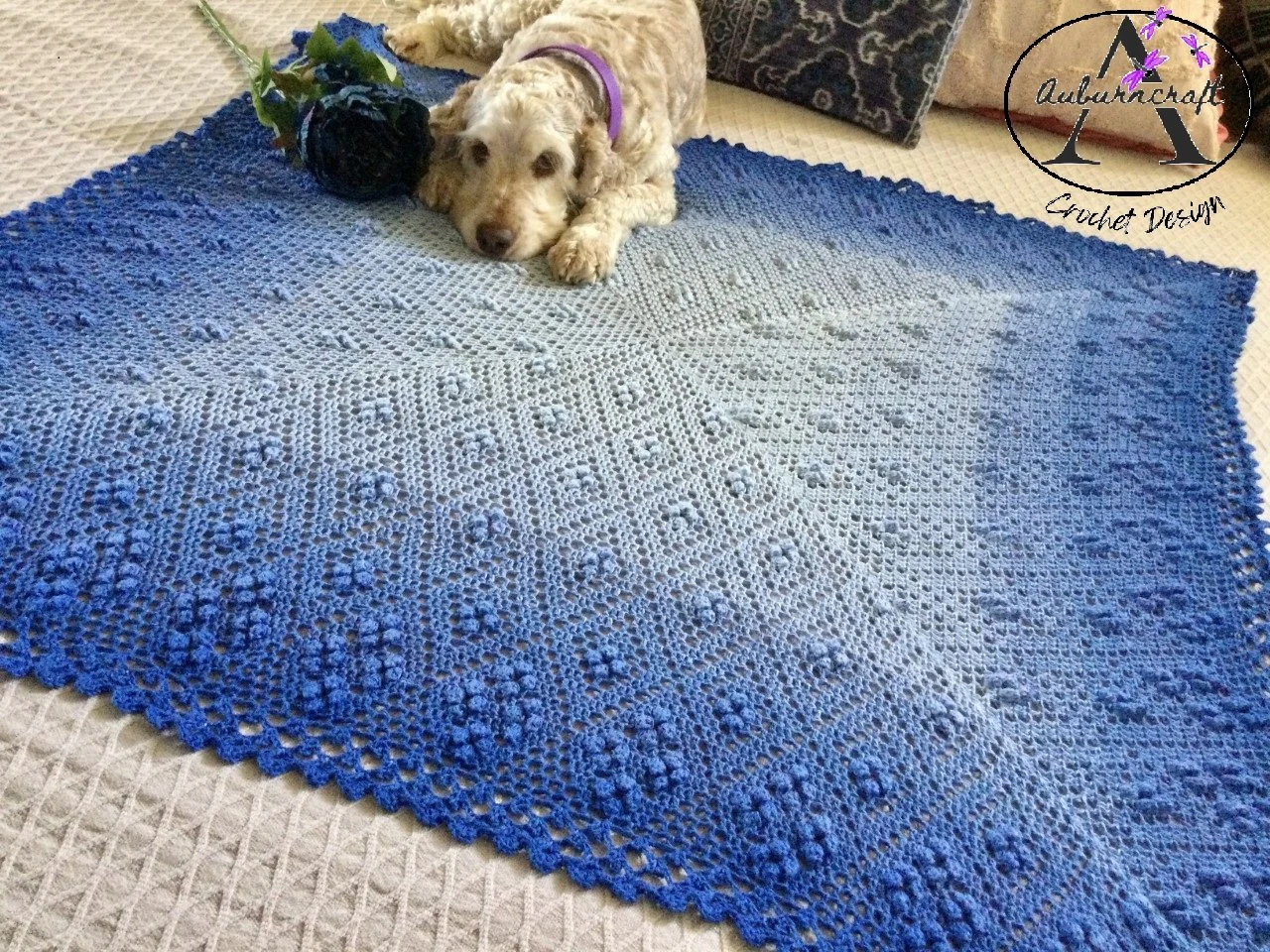
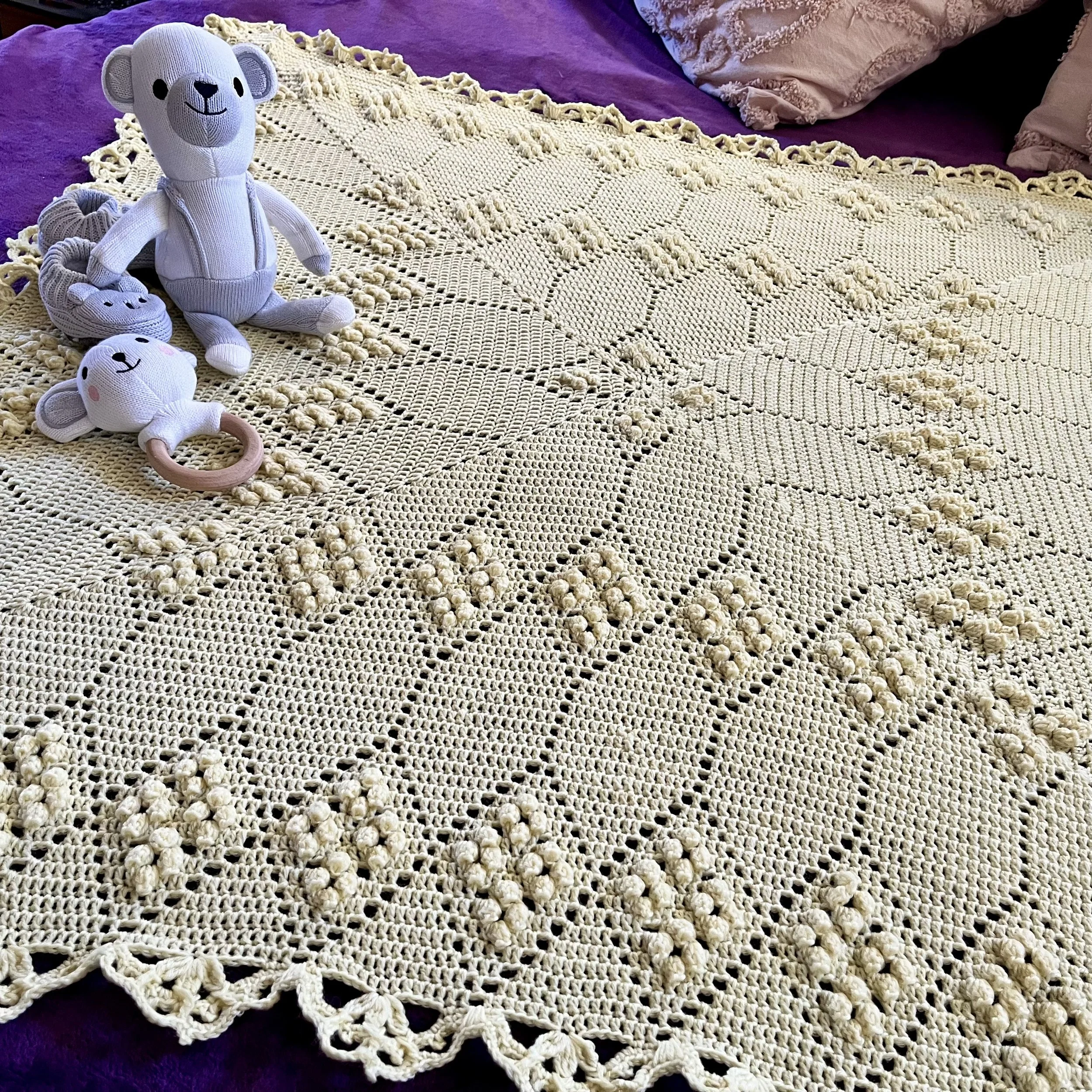
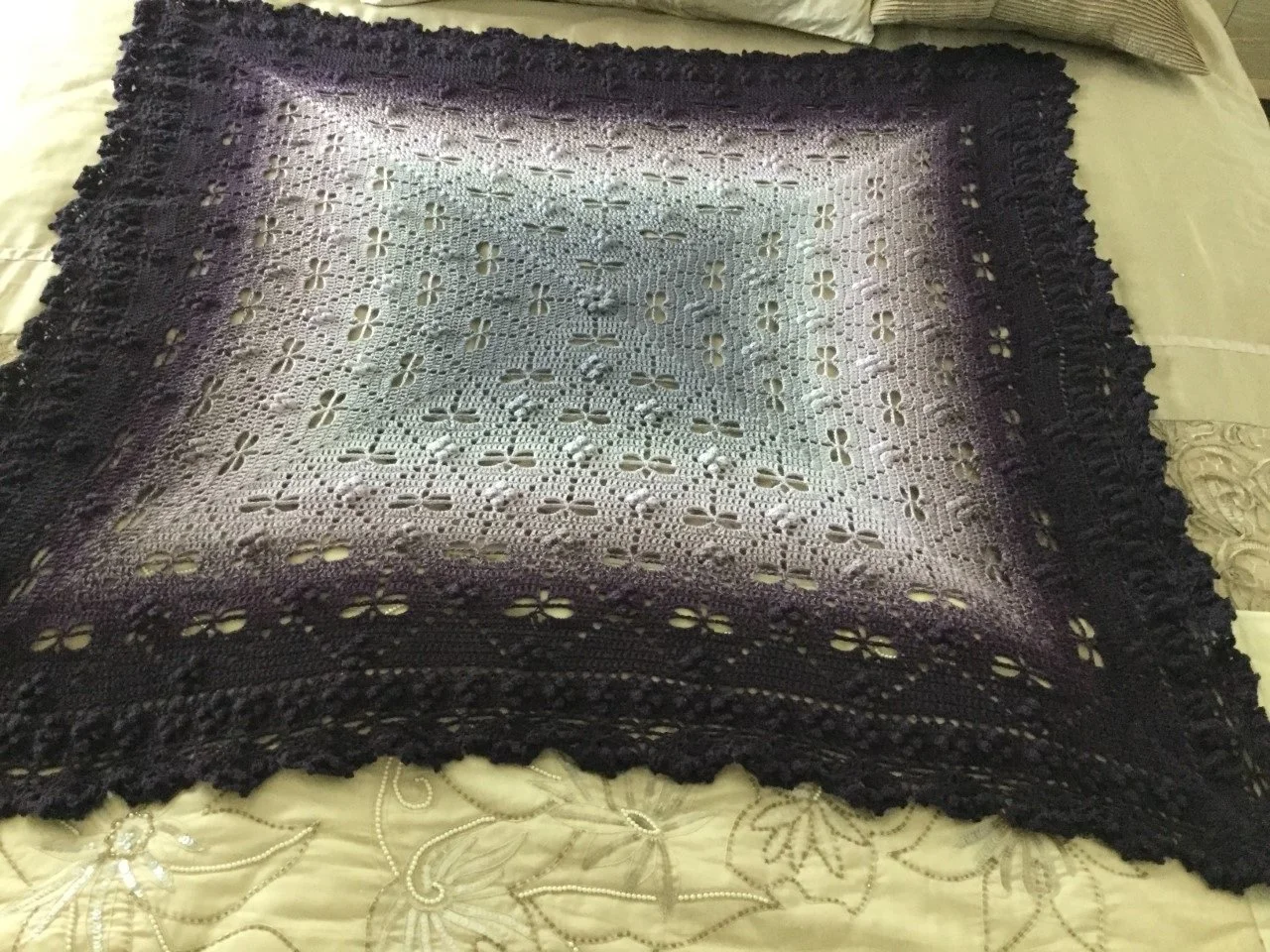
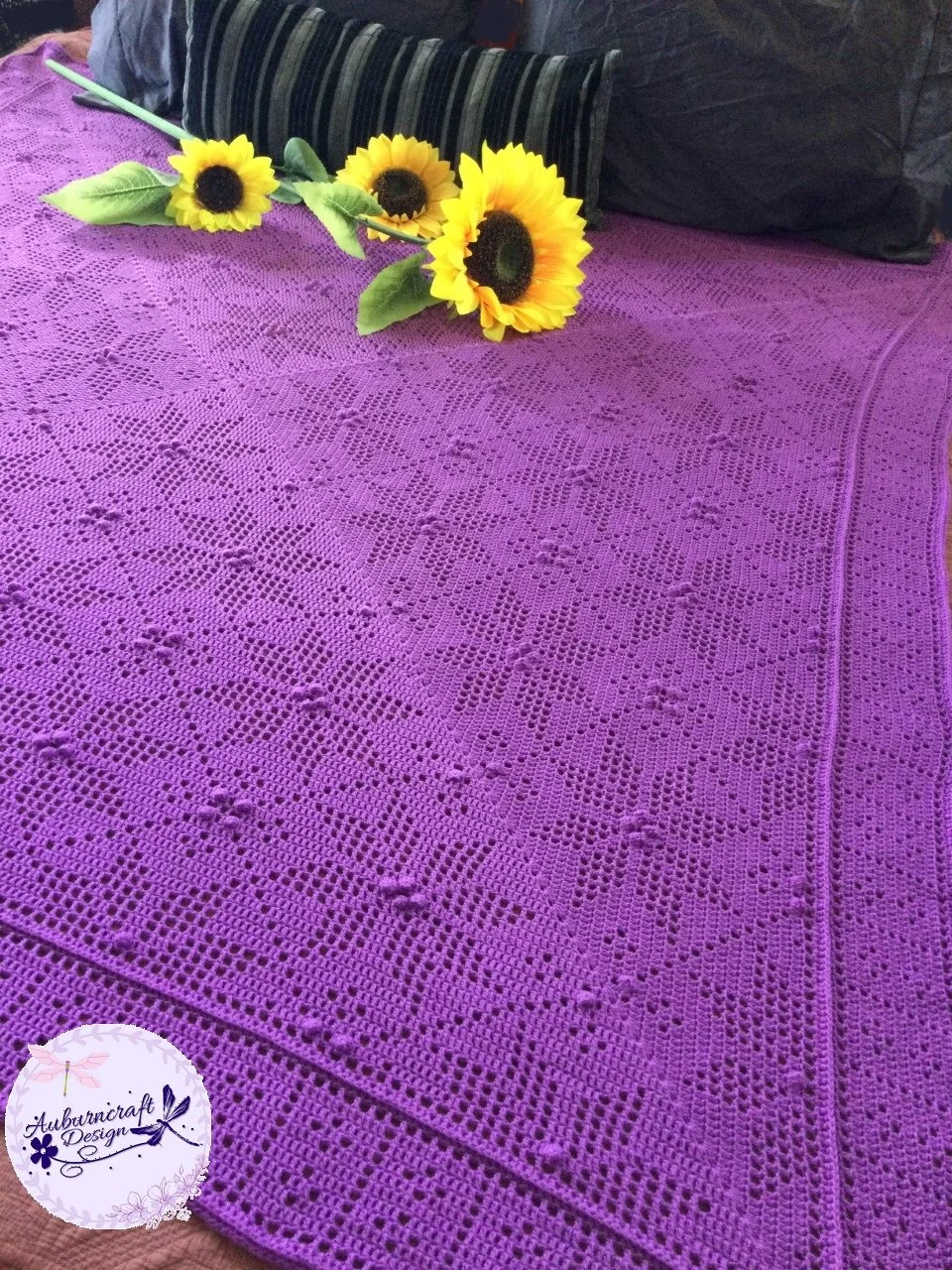
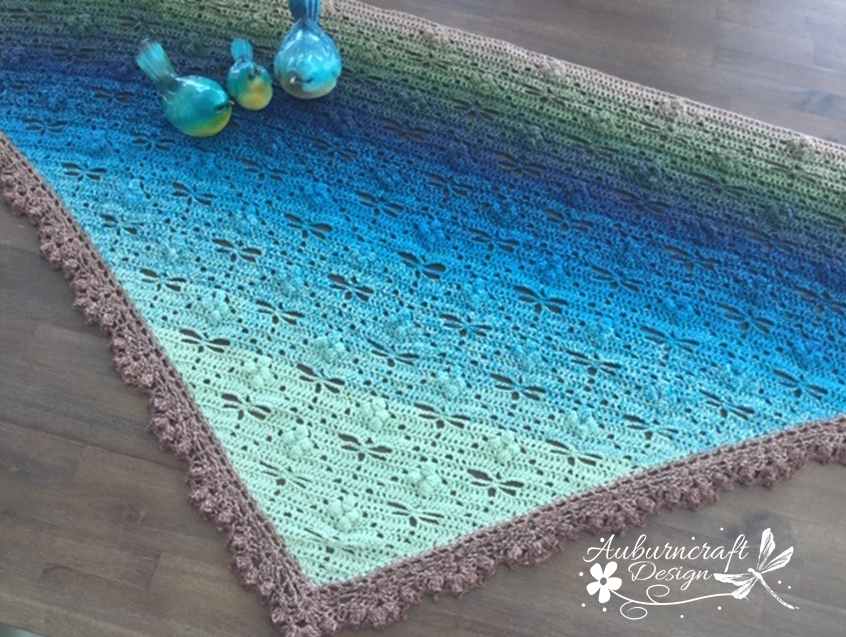
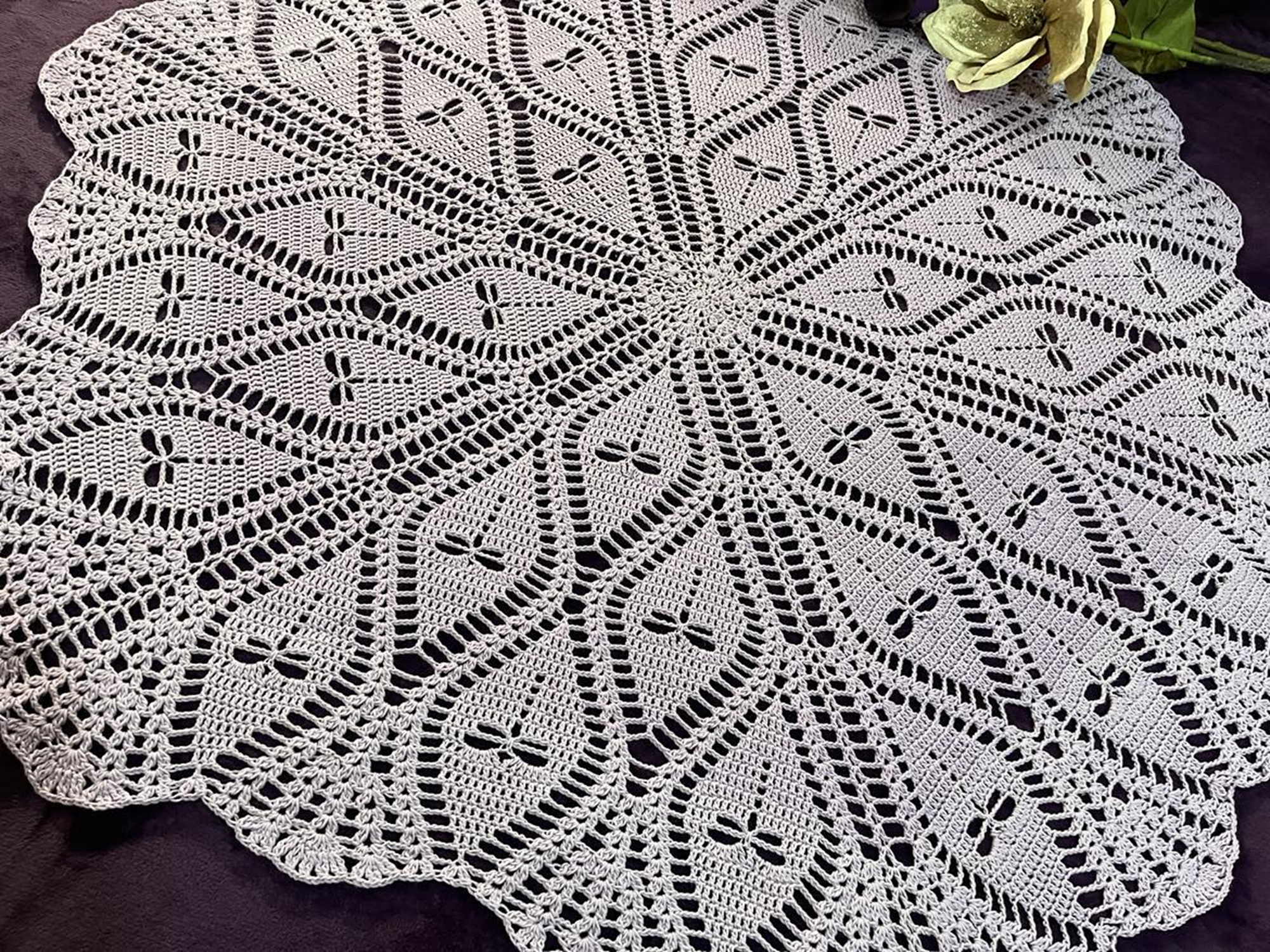
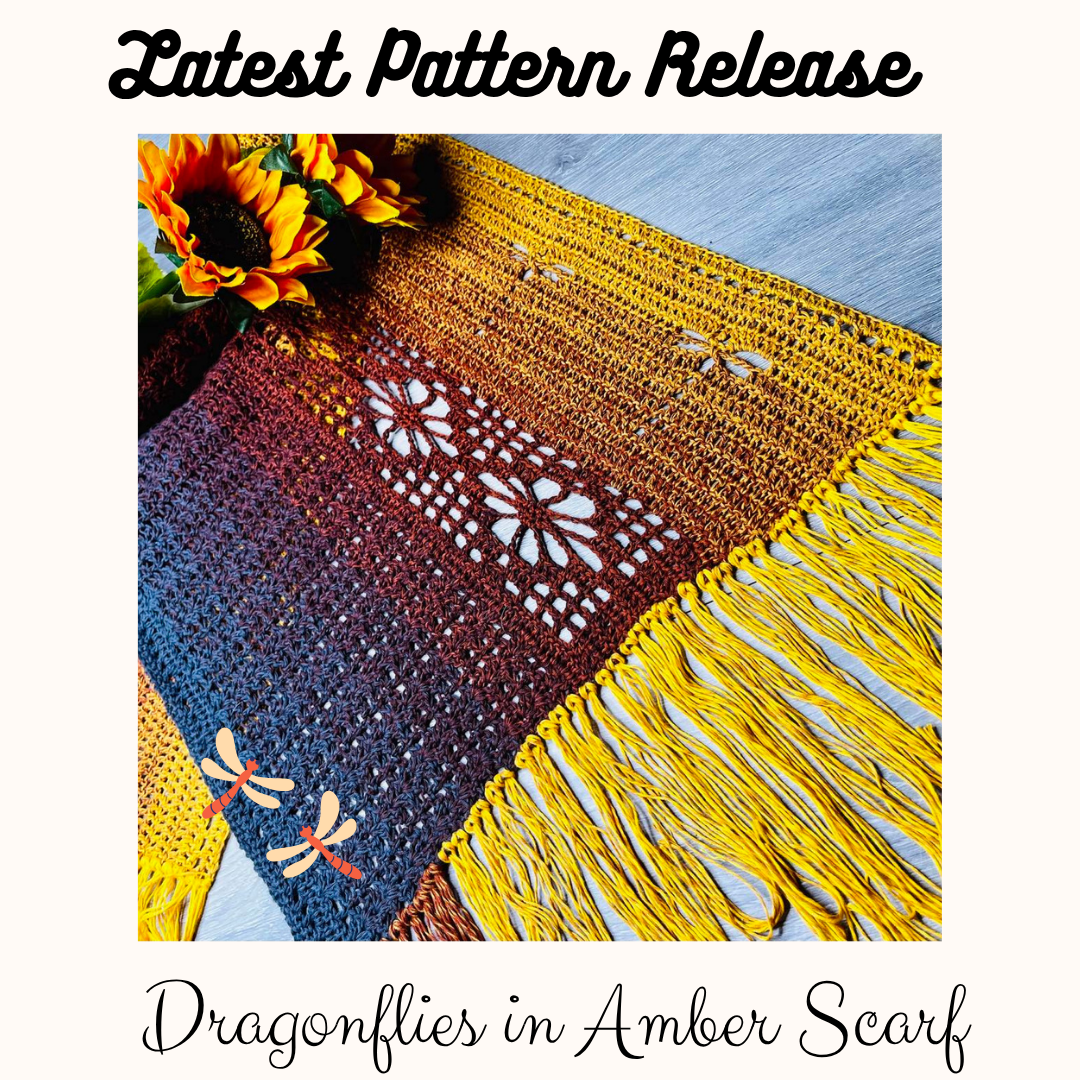
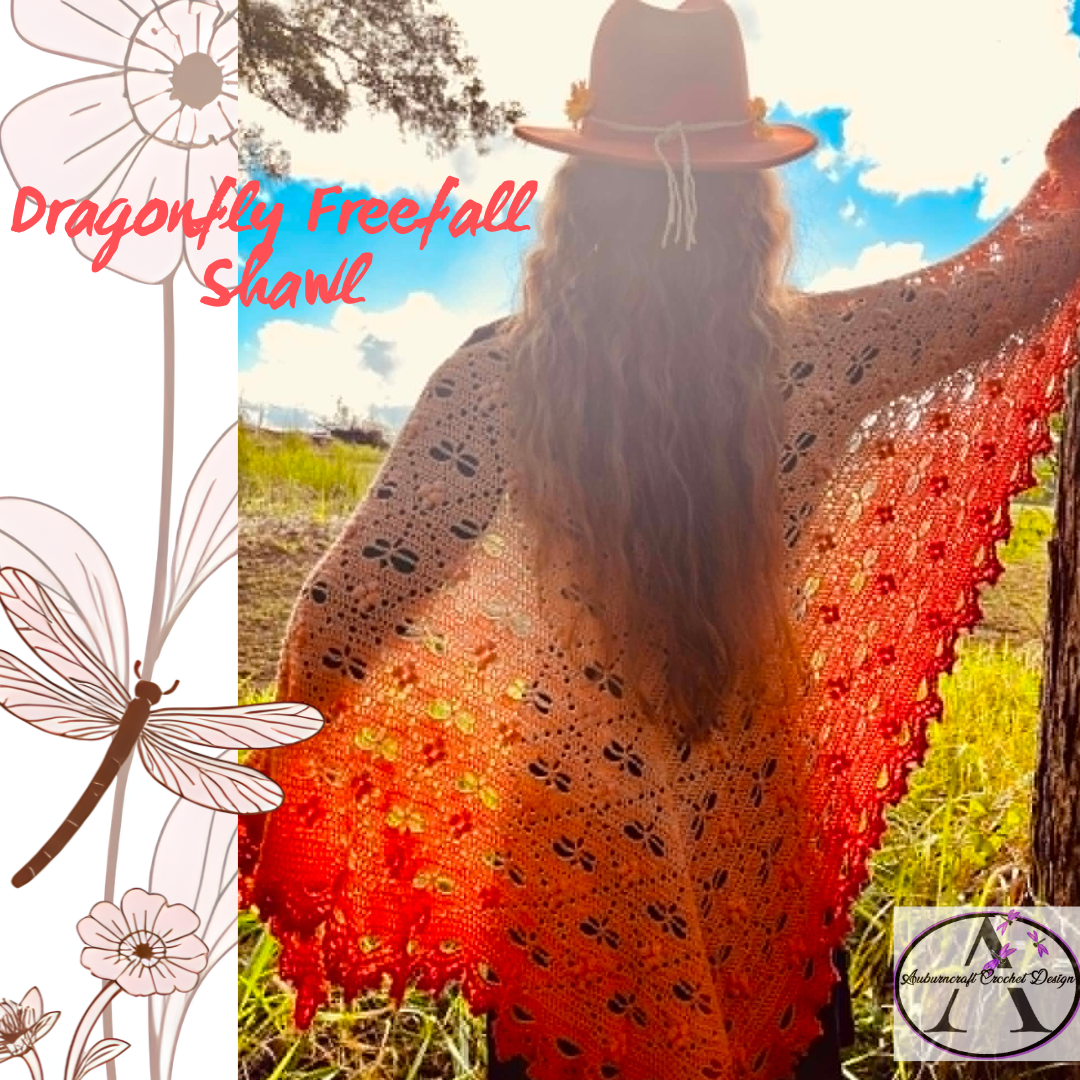
Sometimes a classic stitch meets a favourite motif in just the right way. I had been thinking about combining my signature dragonflies with the humble granny stitch for a while, and finally, the idea came together in a small blanket design.

Where the Dragonflies Dance

Where the Dragonflies Dance brings the good old granny stitch together with my signature dragonflies — a combination I don’t often use, but one that had been quietly waiting in the back of my mind.

I don’t usually reach for the classic granny stitch when designing. It’s a familiar technique, so I often find myself wandering down slightly different paths. But every now and then an idea just clicks, and this was one of those times.

A few balls of Bendigo Woollen Mills Luxury 4ply had been sitting in my yarn stash, and this felt like the perfect project to put them to use. Sometimes the yarn almost seems to choose the design for you.
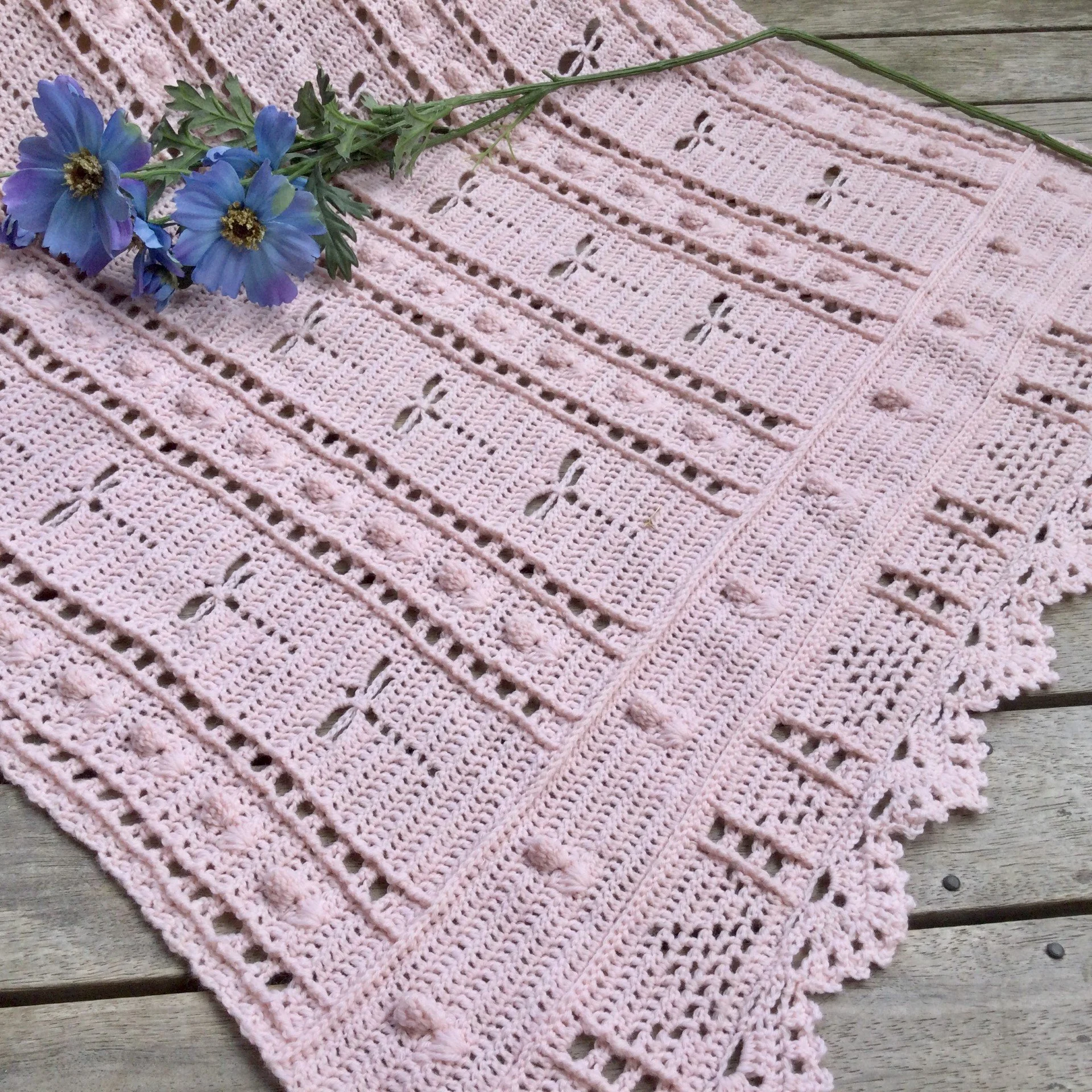
The pattern is built around a 12-row repeat, letting the dragonflies appear and drift across the fabric while the granny stitch provides a simple, predictable structure that’s easy to follow.

For the finishing touch, I added a bit of colour to the tulip border using more Bendigo Woollen Mills Luxury yarn that had been itching to be used. While the stitches in the border are simple, it does require concentration to keep the stitch count correct — sides 1 and 3 are a different length to sides 2 and 4, so you’ll need to pay attention as you go.

Aside from that, this pattern sits at the lower end of intermediate — possibly even leaning toward easy, which is not something I say often about my designs!

The finished blanket measures approximately 37.7 inches / 96 cm by 39.3 inches / 100 cm, a perfect size for a lap blanket, pram blanket, or just something cosy to drape over your favourite chair.

I had so much fun creating this design, and I can already imagine a version worked in rounds in the future — when time allows. If you enjoy dragonflies and like the idea of pairing them with a classic stitch, this one might just be perfect for your hook.

Head to the webpage for further information on materials and to view some of my amazing pattern testers versions of the design.

The Designer The Hook and the Yarn.

The Designer, the Hook, and the Ball of Yarn
(My crochet version of the man, the boy, and the donkey)

Once upon a time there was a crochet designer (Me) who had a lovely ball of yarn (That was certainly NOT GREEN) and a shiny crochet hook. She decided she would design a beautiful pattern to share with the world.

She sat down and began.

Soon someone said,
“Why are you using that yarn? Everyone knows cotton is better.”

So she changed the yarn.

Then another voice said,
“Cotton? Oh no. Acrylic is much more practical.”

So she changed the yarn again.

She started crocheting.

Someone else said,
“That stitch is far too complicated. Beginners won’t like it.”

So she simplified the stitch.

Another person frowned and said,
“Well now it’s too basic. Experienced crocheters will be bored.”

So she made the stitch more intricate again.

She worked on the design all night.

Someone said,
“It should be a blanket.”

So she made it a blanket.

Another person said,
“Blankets take too long. People prefer quick projects.”

So she turned it into a scarf.

A third person chimed in,
“Scarves are overdone. You should make garments.”
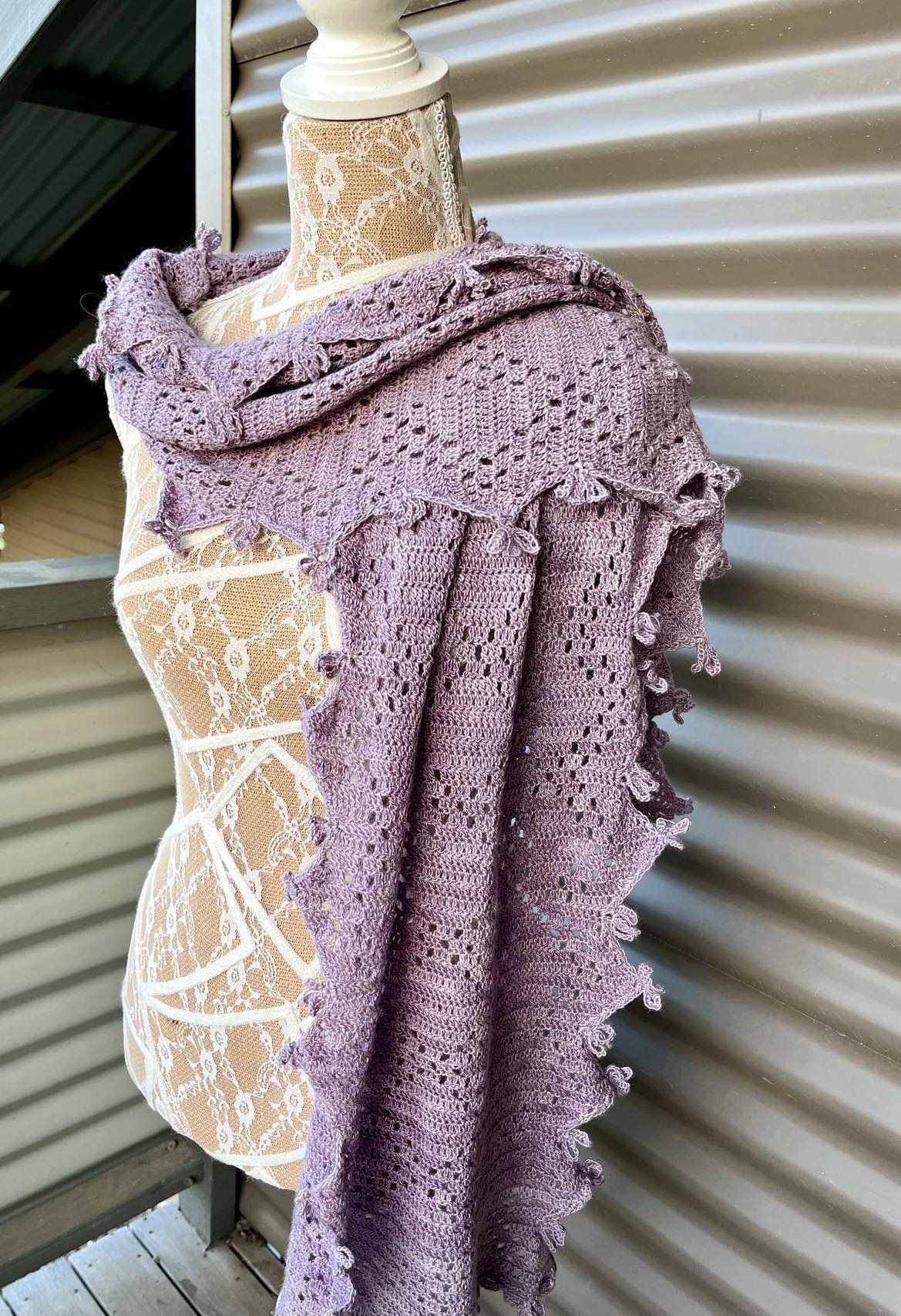
So she tried turning it into a sweater.
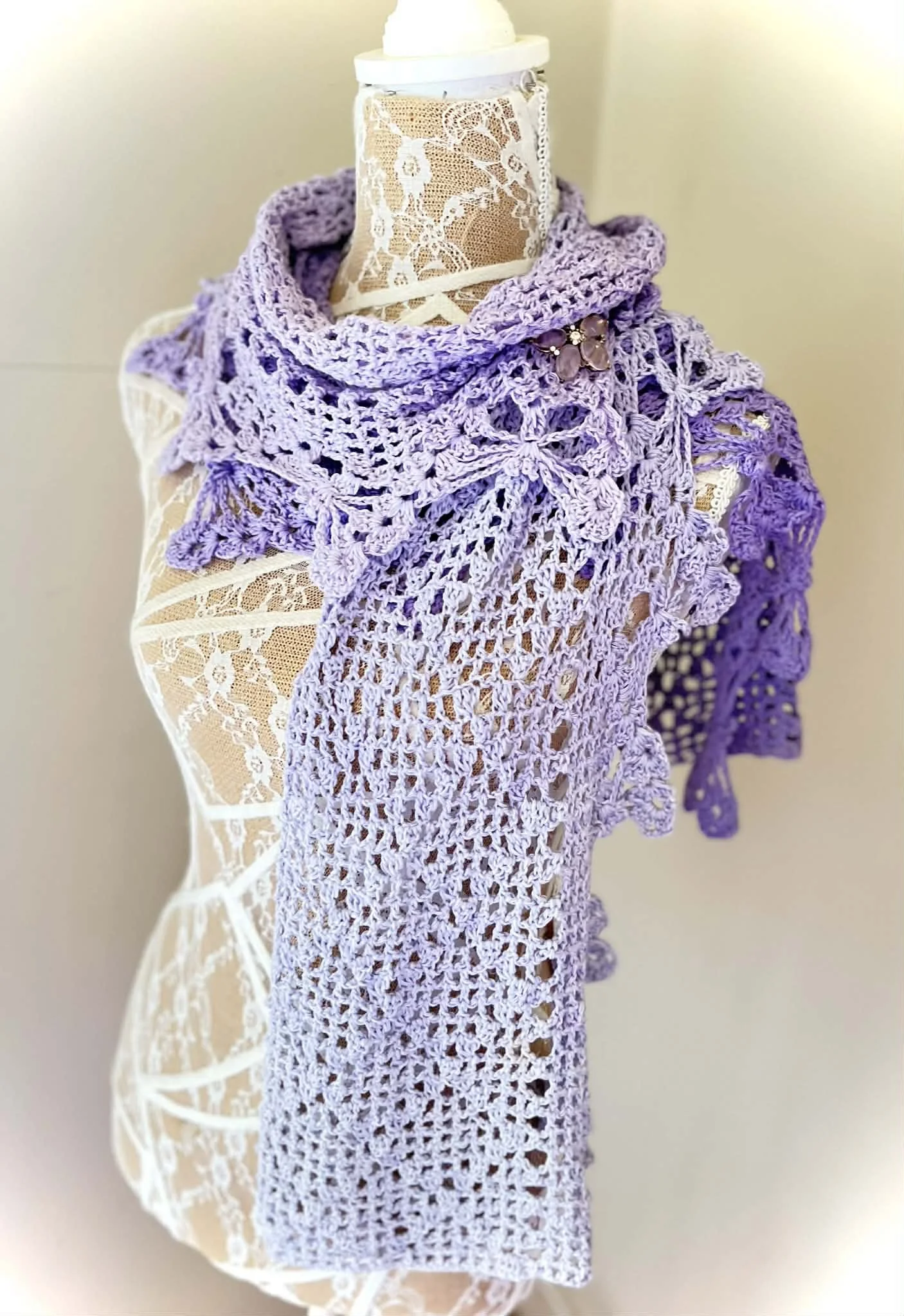
By now the designer had a pile of half-finished ideas, a very confused ball of yarn, and a crochet hook that looked like it needed a lie down.

Finally an old crocheter passing by stopped and watched for a moment.

Then she said,
“My dear, if you try to crochet for everyone, you’ll never finish a single stitch.”

The designer looked at her tangled yarn, picked up her hook again, and said,

“Right then… I’m making what I like.”

And strangely enough…
once she did that, plenty of people liked it too.

Moral of the story:
In crochet design, if you try to please everyone, you’ll end up with nothing but a tangled skein and a headache.

Better to make the thing that makes your hook happy.

And the funny thing is… designing crochet has taught me far more life lessons than I ever expected.

Lesson One: Be yourself.

I don’t want to fit in a box. I don’t want to follow trends. I want to step over the lines and draw my own boundaries.

Pattern sales are wonderful when they happen — and yes, I do like eating — but more importantly I want to be proud of my designs. I want to look at them and think, that’s mine. In my mind I occasionally picture them on a catwalk somewhere… which may or may not involve models dramatically swishing around in very complicated shawls.

A designer can dream.

Lesson Two: Everything annoys someone.

That’s actually a quote from Ricky Gervais, and I suspect he knows what he’s talking about.

If you are not annoying someone, you are probably sitting alone in a room talking to yourself.

You can spend hours making a short video to show off a design. Lighting, angles, editing… the works. Someone will give it a thumbs-down. Why? Who knows. Maybe they hate the colour. Maybe they hate crochet. Maybe they hate Tuesdays.

Someone, somewhere, will take offence at something you do.

In fact, there is probably someone annoyed right now that I quoted Ricky Gervais.

Lesson Three: I am not nearly as clever as I think I am.

Send a pattern to testers and you will very quickly discover the glaringly obvious mistake you somehow managed to overlook.

The one that you read past seventeen times.

Testing is always a humbling experience.

There are designers who say, “Oh, I don’t need testers. I checked the pattern myself.”

Well… good for them.

Personally, I need my testers. They check my maths, my instructions, my sanity, and occasionally my eyesight. They also provide a healthy and regular reminder that I am, in fact, human.

Lesson Four: Crochet skill levels are… flexible.

One person’s intermediate is another person’s advanced. Everyone learns at their own pace and their own level, and that is perfectly fine.

But if you see the word intermediate, it usually means there may be a few slightly tricky bits involved.

Interestingly, it is often the people who are “advanced” — “I have been crocheting for fiiiiiiifty years” — who believe there must be an error or that the pattern should have been written differently.

How do I know they’ve been crocheting for fifty years?

Because that is usually the opening sentence of their message.

I am occasionally tempted to reply,
“Wow… you must be very tired.”

Lesson Five: Humour helps.

If you design long enough you will make mistakes, someone will dislike your work, someone will misunderstand your instructions, and someone will absolutely insist their way of crocheting is the only correct way.

If you can’t laugh a little, you probably won’t last very long.

And perhaps the real lesson is this:

Designing is a strange mix of creativity, stubbornness, problem-solving, and the occasional small crisis involving stitch counts.

But it is also incredibly satisfying to turn a ball of yarn into something that didn’t exist before — and then see someone else in the world make it with their own hands.

That part never gets old.

So I will keep designing.
My testers will keep finding my mistakes.
Someone will keep telling me they’ve been crocheting for fifty years.

And somewhere out there, hopefully, someone will be enjoying the process of making something beautiful from my design.

Which, when you think about it, is the whole point.

Find my patterns on Etsy and Ravelry.

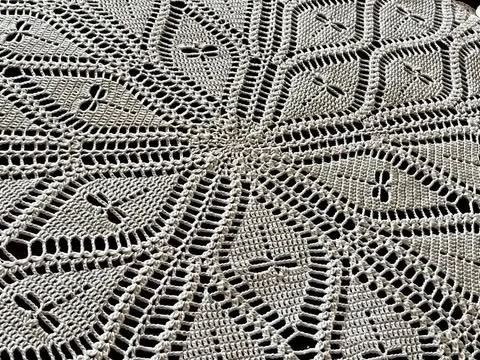
Why I Love Filet Crochet?

Why I Love Filet Crochet

(And Why You Might Too!)

If you're looking for techniques and tips, be sure to check out my post: Filet Crochet: Keeping it Neat!

What Is Filet Crochet, Anyway?

The word filet is French for "net"—or so I’m told! It gets its name from the open squares that resemble the mesh of a net. Simple, structured, and surprisingly elegant, filet crochet has a charm all its own.

Historically, filet crochet evolved from traditional lace-making techniques in Europe, particularly in France and Italy. It was often used to create delicate curtains, tablecloths, and samplers with decorative motifs—flowers, birds, and monograms were all popular. Though it may look fancy, filet is usually made with basic stitches, giving it a lovely blend of accessibility and sophistication.

But Why Choose Filet Crochet?

Others may have their own opinions, but here’s mine!

After reflecting on why so many of my designs lean toward the filet technique, I realised it comes down to a few simple reasons:

Why I Love Filet Crochet

(And Why You Might Too!)

If you're looking for techniques and tips, be sure to check out my post: Filet Crochet: Keeping it Neat!

What Is Filet Crochet, Anyway?

The word filet is French for “net”—or so I’m told! It gets its name from the open squares that resemble the mesh of a fishing net. Simple, structured, and surprisingly elegant, filet crochet has a charm all its own.

Historically, filet crochet evolved from traditional lace-making techniques in Europe, particularly in France and Italy. It was often used to create delicate curtains, tablecloths, and decorative samplers. Popular motifs included flowers, birds, and monograms. Though it may look intricate, filet crochet is usually made using very basic stitches, which gives it a wonderful balance of accessibility and sophistication.

Filet crochet is also a technique that works beautifully for creating pictures and motifs. By arranging open and filled blocks in a grid, you can form shapes, patterns, and even detailed images.

But Why Choose Filet Crochet?

Others may have their own opinions, but here’s mine.

After reflecting on why so many of my designs lean toward the filet technique, I realised it comes down to a few simple reasons.

1. I’m not overly keen on constantly swapping yarn colours.
Let’s face it—changing colours every few stitches can get a bit fiddly.

2. While sewing in lots of ends doesn’t completely bother me…
…it’s still not my favourite way to spend my crafting time. Less ends = more joy!

3. Filet crochet is incredibly versatile.
You can create something simple and sweet, or craft a masterpiece that spans a wall. Often, even large and intricate pieces use only basic stitches—but it’s the arrangement of open and filled blocks that creates the magic.

4. It can be wonderfully technical—if you want it to be.
Working with detailed images or complex motifs means every open block matters. A single square in the wrong spot can throw off the whole design. That challenge? I absolutely love it.

5. It’s rhythmic and relaxing.
Once you settle into the pattern of open and solid blocks, the work becomes wonderfully meditative. It’s the sort of crochet that lets you relax while still keeping your mind gently engaged.

6. Most of all, I simply enjoy it.
And that, I believe, is what it’s really all about. You need to enjoy what you’re making. For me, filet crochet just feels right.

Testing the Boundaries of Filet Crochet

Filet crochet is often thought of as neat rows of boxes worked in a fairly regimented way. But I rather enjoy testing those boundaries.

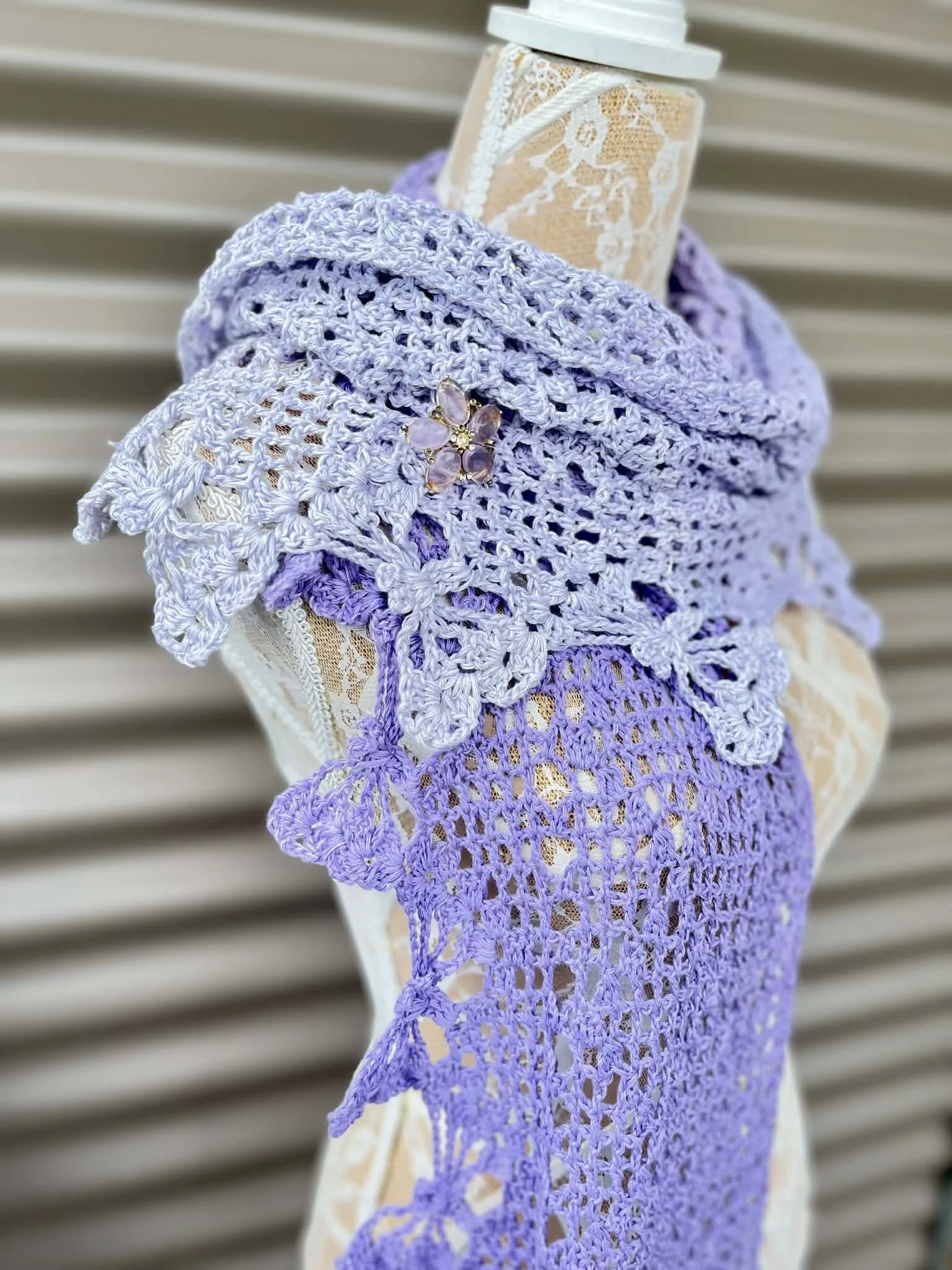
One of my recent designs, A Moment of Butterflies Scarf, does just that. While designing the filet pattern for the scarf itself, I wanted the filled blocks within the design to really stand out. After several attempts, the pattern still wasn’t giving me the effect I was looking for—the solid blocks simply weren’t popping the way I wanted them to.

So I experimented a little.

Instead of using the traditional solid filet block, I replaced it with a Dc3tog (US). That small change added a little texture and created the visual pop I was after within the scarf pattern.

The butterflies themselves hang from the edge of the scarf, but the textured blocks within the filet design help give the overall piece a bit more depth and interest.

It does require just a little extra concentration while crocheting, but that small adjustment helped bring the design to life and satisfied my love of creating something a little different.

A Moment of Butterflies

If you're curious to see how it worked out, you can take a look at A Moment of Butterflies Scarf here.

My Favourite Tools & Yarn for Filet Crochet

When working in filet crochet, I typically use a 3.5 mm hook and either 4 ply (fingering weight) or 8 ply (DK weight) yarn, depending on the project.

I especially enjoy working with cotton. It’s crisp, has great stitch definition, and holds its shape beautifully—perfect for showing off those clean filet blocks.

One of my absolute favourites is cotton from Bendigo Woollen Mills. It’s smooth, strong, and ideal for projects where you want the stitches to really stand out. If you haven’t tried it yet, I highly recommend giving it a go.

Of course, I dabble in other crochet styles too—but I always find myself coming back to filet. There’s something so satisfying, so meditative, and so beautiful about working in this technique.

Do you enjoy filet crochet too? Or are you tempted to try it for the first time? I’d love to hear your thoughts in the comments!

Check out some of my Filet Designs. Patterns are available for all of them on Ravelry and Etsy.

Stepping into 2026

Some of the designs created in 2025

Every new year starts the same way. Bold declarations are made. Bad habits are banished. Someone, somewhere, buys a planner.

And suddenly, 2026 is here. How did that even happen? I feel like I only just turned around after celebrating the Millennium, wondering whether the Y2K bug would destroy life as we know it or not. That slightly unhinged, end-of-the-world-but-make-it-digital vibe. And yet… here we are. 2026, somehow still standing.

It really makes no difference what declaration I make on New Year’s Eve — I know I am not going to change. I won’t use that planner purchased with intent. I won’t complete every crochet project I begin. The one shoved in the corner and glaring at me every time I enter the room will continue to judge me in silence. I won’t resist the urge to purchase that really nice yarn I don’t need but absolutely might need later. And the one thing I am absolutely certain of is that, as a designer, I won’t please everyone — no matter how much effort, experience, or care goes into the work.

My year ended with a four-star review on Etsy from a buyer who loved the pattern but, for some reason, found the written instructions in this much-loved design (with dozens of five-star reviews) hurt their head. The graph, however, was great. Just as well I spent hours upon hours not only writing the “offending” words, but also painstakingly drawing a usable chart. A progress photo was included, and the project looked like it was coming along nicely. Short of offering to crochet the piece myself for the buyer — in their chosen yarn, size, and preferred tension — there really was no point worrying about it.

I know the pattern is well written and clearly marked as intermediate level. So what can a person do? I looked at that review — which wasn’t awful, but… meh, it could certainly have been better — and realised it summed up 2025 rather well. A year of effort, learning, persistence, and the occasional quiet sigh. It could have been better.

Do I expect 2026 to be better, stronger, kinder? One can only hope — but it would be unwise to hold one’s breath. Experience suggests optimism is best served with a side of realism and a good cup of tea.

As I head into 2026, I will do my best to continue creating usable patterns of unique pieces. They will, no doubt, remain intermediate level — because that’s where I enjoy designing, and where creativity still feels like a challenge rather than a checklist. I will savour the kind reviews people leave and, just as surely, feel a little miserable over the lesser ones that pop up from time to time, even though I know better.

The biggest thing to remember is this: while a new year may have begun, renewal does not require becoming a completely different person. And in crochet terms, not every project needs to be finished. Some are lessons. Some are experiments. Some are simply there to remind us where we were at the time. If others do not appreciate the skill, time, and effort that go into crochet — whether as a gift or as a design — that does not make me less.

Crochet is different for every individual. Some people love fast projects and instant gratification. Others enjoy charts, challenges, and complexity. Neither is wrong.

For me, I enjoy creating more complex designs, while also finding that the repetition of crochet helps focus the mind on other things. The quiet counting, the reworking of a design, the problem-solving when something doesn’t quite sit right — it’s a challenge I love to immerse myself in, even when it tests my patience.

My hopes for 2026

To create some amazing designs.
That people will be courteous and thoughtful when leaving reviews.
That there will be some appreciation for the many hours spent creating workable patterns.

And mostly, that people remember that behind every pattern is a real person — thinking, adjusting, counting, frogging, and doing their best.

Designed with care, tested with love, and unmistakably me — 100% Auburncraft.

The Goldilocks Method of Designing Crochet. An Auburncraft Initiative!

You know that feeling — you get a brilliant idea and, in your head, it’s epic!

This is going to be bigger than Ben Hur (or that’s the saying, I think?).

You map it out in your head, and the sheer magnitude of just how brilliant this idea is makes your head a few sizes too large for the gorgeous crochet beanie you made last week!

Of course, in your head, this design works per-fect-ly... Every stitch lines up, and it all falls into place to create a piece of crochet that a queen would wish to have adorning her in some manner or other.

Then you begin working on this masterpiece. You try one yarn, and it doesn’t work that great — maybe the texture is too rough. You try another, and it’s way too soft. Then you try a third, and it seems just right.

You grab your 5mm hook and do a few rows — turns out it’s too big.

You work a few rows with your 4mm and, you guessed it, it’s too small. By this time, you can hear your 4.5mm grumbling from the hook storage: “Told you I was the right size. You should have picked me in the first place.”

Sure enough, the 4.5mm is just right — and it did have a point. You should have listened.

single-crochet.jpg

Single Crochet

You think you’re now ready to whip up this masterpiece and begin using single crochet (US). You work up a large portion of the design, but the further you go, the more you start to think this stitch might not be right for it.

Maybe this just isn’t going to work.

You slow down, partly so you can ponder how you could possibly be wrong. After all, it worked so well in your head! Eventually, you’re down to one stitch a minute. Your brain is shouting loud and clear: IT WILL NOT WORK.

The realisation dawns — it just ain’t gonna work — and off you go a-frogging.

But then your vision begins to shift. This new idea will work — it will be super fabulous for sure. How could you have missed this before?

half-double-crochet.jpg

Half Double Crochet

Half double crochet may well be the way to go with this. This will work! This will be great! Fantastic! Fabulous! You may even be awarded Queen of the World for this design.

Butttttttttt… you get to about the same point you were at with the single crochet and just know it is NOT SO!

By this time, the new, fabulous, incredible design has been given the gift of flight — you chuck it across the room and leave it there for a few hours.

waist-coat-st.jpg

Waistcoat Stitch

This is it! This is the one!! This stitch will be raised above all others and become legend in this design. People will queue for hours to admire the crochet artistry you’ve created with this stitch.

As you work, you realise it’s true — it does work. It’s right. Wonderful, even. You crochet harder and faster, knowing those queues of crochet fans will soon be waiting to view your masterpiece.

Once again, your head has grown a few sizes too large for that beanie, and before you know it, the day is gone. It’s late, and suddenly you feel an overwhelming urge for a large bowl of porridge. You must have one! After all, you’ve been working very hard all day and thoroughly deserve it!

bowl-of-p.png

You’re now so exhausted from your day of frogging that you also require a nap.
You go in search of a bed — but of course, it has to be one that’s just right!

bear-in-bed.jpeg

The Goldilocks Method of Crochet Design is a patented technique used exclusively by Auburncraft Crochet Design.
No bears were harmed in the making of this crochet method — although several bowls of porridge were definitely eaten.